Full steam ahead for Rewilding Britain

The Great Fen, East Anglia - not all re-wilding occurs in marginal uplandsThe Great Fen, East Anglia – not all re-wilding occurs in marginal uplands

This initiative was established in 2014 from a broad-based coalition of NGOs, with Wild Europe as a trustee.

It aims to catalyse the return of large areas of fully functioning ecosystems together with their wildlife to one of Europe’s most crowded and highly developed countries – highlighting the benefits of such areas to the general public, media and decision takers in government.

By 2030, within 15 years, Rewilding Britain has set itself the target of establishing 300,000 hectares of core land, connected wherever possible, together with three marine reserves.

The three partner countries

Remnant of the Great Forest of Caledon – Glen Affric. Copyright: Alan Watson/Forest Light.jpgRemnant of the Great Forest of Caledon – Glen Affric. Copyright: Alan Watson/Forest Light.jpg

Scotland of course has the greatest geographic potential, particularly in the Highlands and Islands – with the Cairngorms and Flow Country regions beckoning as particularly extensive opportunities. As does the Borders Country with its visionary restoration projects in and around the Carrifran Valley. Wild Europe (as Wild Scotland) set up a joint study on the social and economic benefits of wild areas in 2005, subsequently developed through Scottish Natural Heritage which is now planning an upgraded edition.

Poised for reintroduction. Photo credit: "Beaver pho34" by Per Harald Olsen. Licensed under CC BY-SA 3.0 via Wikimedia CommonsPoised for reintroduction. Photo credit: “Beaver pho34” by Per Harald Olsen. Licensed under CC BY-SA 3.0 via Wikimedia Commons

In Wales there is also extensive potential for rewilding: in the southern Brecon Beacons, the mid-country Elan and Plynlimon Valleys, and northwards into Snowdonia.

Wild Europe is partnering a project it initiated (as Wild Wales) back in 2005 to reintroduce beaver, a keystone species for rewilding. This has already occurred in 27 countries across Europe and after much delay it is hoped there will finally be a go-ahead once the Scottish Executive takes its own decision whether to give permanence to a trial reintroduction at Knapdale. There is even substantial scope for rewilding in England, with initiatives such as Wild Ennerdale in the Lake District and the Great Fen in East Anglia already well established.

A strategy for Northern Ireland is pending once the main group has become established.

Throwing down the gauntlet … to mainland Europe

Although only recently established, Rewilding Britain’s advent has been widely welcomed by the conservation community.

It represents a considerable leap forward for the rewilding agenda, building on awareness raised by such organizations as the Wildland Network, and the consultation and planning exercise undertaken by the Wild Britain initiative back in 2004 – 06.

Substantial funding has already been raised for recruitment of a full time director and an executive team.

Perhaps most significant of all, there is potential to establish three areas – one in Scotland, Wales and England – conforming in scale to the Wild Europe definition of wilderness.

That would be a true pointer for all other countries!

Wild Europe joins new rewilding group in France

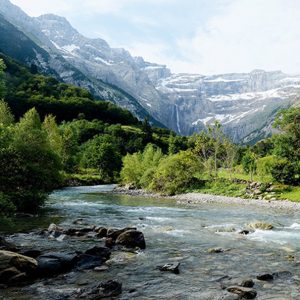
Rewilding through natural regeneration is widespread in the Pyrenees and many other areas of FranceRewilding through natural regeneration is widespread in the Pyrenees and many other areas of France

In 2012 a specialist Wilderness Group was established, within the IUCN National Committee based in Paris, to assess potential for a wilderness strategy.

This brought together a widely acknowledged range of experts from NGOs with participation by the L’Office Nacional des Forêts (ONF), the state forestry agency.

Wild Europe was invited to participate in the IUCN France Group, and since regularly provided input to meetings in Paris. We have also promoted the benefits of wilderness more generally in a European context, though a conference in Chambery (2013) and via media such as the Naturalité publication.

World class potential

With its extensive near-natural areas, relatively low rural population density, world class conservation management and well developed eco-tourism market, France has great potential for developing its strategy.

This can involved a range of habitats including forest, but also wetland, litoral, grassland and Alpine.

A strategy outline has been proposed and prospective opportunities are currently being identified through preliminary mapping.

The Economic Benefits Working Group

Introduction

The economic benefits group is tasked with identifying, valuing and promoting the economic benefits of wilderness and wild areas, with focus on non extractive, no-impact benefits derived from ecotourism, ecosystem services and usage for social betterment.

The group will initially include business people, economists, ecosystem specialists, landowners, farmers, social enterprise entrepreneurs – all of whom share a profound regard for wilderness as well as contributing their professional expertise.

While the true intrinsic value of the wild is priceless, there is no doubt that realization of its economic value can attract support for its protection and expansion. However, as laid down firmly in the Group’s operating principles below, our aim is to strengthen, not replace, traditional approaches to wilderness and wild areas.

Protecting wilderness can bring economic benefits

Objectives

1. To identify and promote, wherever desirable and feasible, economic benefits arising from non-extractive, minimal impact activities relating to wilderness and wild areas, viz:

  • nature tourism
  • related activities: recreation, corporate events, themed retreats
  • ecosystem services: carbon sequestration, flood mitigation, pollution alleviation, others
  • social services: education, youth development, youth at risk, healthcare, peace & reconciliation
  • ancillary activities: visitor centres, guiding, accommodation & sustenance, retail, craft, transport
  • related goods and services in adjacent areas benefiting from association (wilderness image, logo, product value added, marketing, productivity and business support)

These benefits would be additional to any relating to biodiversity value, which could, where appropriate, themselves be enhanced with restoration and species reintroduction, with associated grant and enterprise opportunity.

2. To apply these economic benefits to protection or restoration aims in specific areas, and to national and organizational strategies.

Where relevant this can involve using ANEEP – Assessment of Non Extractive Economic Potential as a multi-level instrument of analysis of benefits associated with wilderness and wild areas. According to the level chosen, the ANEEP could include:

  • overview of non-extractive economic benefit potential
  • linkage to restoration and reintroduction opportunity
  • cost:benefit exercises for alternative approaches
  • identification of specific opportunities – matching with operatives if relevant
  • signposting to sources of funding, advice, marketing networks
  • assistance with planning and upgrading of local capacity

3. To input credible economic benefit content for Wild Europe’s general strategy and individual policy objectives – eg:

  • support for establishment of national wilderness strategies
  • networking for collective address of threats
  • input to individual programmes – eg Old Growth Forest strategy, Common Agricultural Policy (CAP) Reform
  • economic rationale and business enterprise development for social benefits
  • collation and dissemination of best practice
  • promoting models for Forestry Agency adoption (replicating Coillte/Nephin Ireland, FCS Scotland, Staatsbosbeheer Netherlands)
  • demonstrating wilderness benefits to European Commission and Member States – viz support for the N2000 programme, Green Infrastructure and PES, rural development programme, other (non Environment) DG objectives
  • ensuring the equivalent for non EU countries – via input to best practice sharing, Neighbourhood Agreements, Accession Treaties, trade & aid agreements

Six Principles for operation

  1. The economic benefit approach is intended to reinforce, not replace or overshadow, traditional approaches to promotion of wilderness and wild areas – namely their intrinsic, spiritual and ecological values.
  2. Any project entered into via this economic benefits approach would have the above principle enshrined in its Mission Statement to govern all strategy and activity.
  3. Any proposals for economic benefit implementation would be preceded by an Impact Assessment to ascertain that their ultimate consequence would be not inadvertently catalyse developments damaging to the underlying wilderness and wild area objective.
  4. Management and ownership controls would be adopted to assure these principles are fully enacted.
  5. Any related developments would be located with future expansion of wilderness and wild areas in mind.
  6. In identifying beneficiaries from benefit development support, priority will be given to local communities and landholders as well as key supporting decision takers.

Mode of Operation

Principally by email and phone, meeting in parallel with the Wild Europe Executive Committee.

Some 15 – 20 members including specialisms in ecology, conservation management, tourism enterprise, business finance and management, agronomics, macro economics, ecosystem services, fund raising.

Two co-chairs: Toby Aykroyd and Neil Birnie

For further information: tobyaykroyd@wildeurope.org

Bark Beetle Breakthrough

Ips typographus – a solution in the offing?Ips typographus – a solution in the offing?

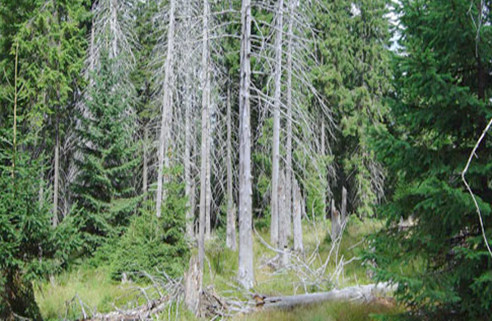
The goal: keeping this natural process away from commercial forestryThe goal: keeping this natural process away from commercial forestry

New potential for acceptance of non-intervention management by foresters

A new consensus is emerging between conservationists and forest managers on management of bark beetle in non-intervention circumstances.

The breakthrough centres on an Austrian initiative to provide guidance on dealing with bark beetle outbreaks in Austrian national parks and wilderness areas, without compromising the non-intervention philosophy in the core zone of these areas and at the same time providing sufficient protection to surrounding landowners and their managed forests.

This is the result of an intensive discussion process between Austrian conservationists, landowners, forest management authorities, park administrations and the Austrian Ministry of Forests, Agriculture, Environment and Water Management.

The initiative is based on development of a zonation model, which foresees a bark beetle control zone of varying width around the non-intervention zones of the protected areas. It builds on recent research and practical experience in the Kalkalpen National Park and the Dürrenstein Wilderness Area, both of which adhere to a strict non-intervention management regime in their core zones: 15600 ha in Kalkalpen, 3500 ha in Dürrenstein.

The model is inspired by a comparable zonation in the oldest parts of the Bavarian Forest National Park, but it is more sophisticated than the Bavarian model. It now enjoys the broad support of Austrian conservationists and forest management authorities alike.

The initiative is explained in a Position Paper which marks a milestone in Austrian wilderness policy. It will hopefully provide a basis for setting up further large scale non-intervention areas in the spruce-dominated mountain forests of Austria and elsewhere in Europe.

Wild Europe definition of wilderness

The Importance of Practical Definitions

A definition of wilderness and wild areas has now been developed by Wild Europe’s Wilderness Working Group. It builds on the existing IUCN Category 1B classification, adapting it to a European context.

One of the main reasons for the absence of a coordinated strategy on wilderness and large natural habitat areas in Europe was the lack of a common working definition.

There are many different words for ‘wilderness’ and ‘wild’ and it is impossible to adequately promote, protect or restore an area if the qualities one is focusing on remain unclear, or are understood differently according to geographic location, individual perception or local culture.

Equally, if inappropriate definitions are employed, this can itself create an obstacle to achieving conservation objectives. Whilst the words ‘wilderness’ or ‘wild’ can evoke strong support in some quarters, they can lead to confusion among traditional conservationists and provoke negative reaction from landholding or farming interests whose resource has produced a well tended landscape which they do not wish to see ‘reverting to scrub’.

Wildness – what’s in a word?

Swiss Alpine forest: wild area or wilderness? The devil’s in the detailSwiss Alpine forest: wild area or wilderness? The devil’s in the detail

There are a few areas in Europe where wilderness can currently be found in the sense of the IUCN Classification, referring to very substantial regions that are largely untouched by the hand of man. It occurs in parts of Finland, Sweden, Norway, Ukraine and Western Russia together with bordering states. There are also elements in Central and Southern Europe.

By contrast “wild areas” can be said to cover a range of intermediate landscapes – from near wilderness where natural process and habitat is virtually unaltered, to other areas where the condition of natural processes and habitats is more substantially modified by grazing, sporting activity, forestry or general imprint of human artifact. Wild areas are smaller, often fragmented and scattered across the continent.

Attainment of “wilderness” status is the ultimate goal in this process wherever scale, biodiversity needs, geography and landholding interests permit.

The above map of wildness in Europe is derived by amalgamating measures of land cover, population density and remoteness from road or rail access.

Any definition involves a multi-angled consideration of scale, landscape impact, prevalence of natural process and ability to deliver significant ecological services (most notably in addressing climate change) as well as host a range of wild area related recreational or social activities. It is further determined by subjective opinion: the spirit of wild areas that enables solitude, sense of wholeness, belonging, healing, awareness and self-development.

In this latter context, there is also the concept of “urban and neo-urban wildness” where issues of personal perception and values play as much of a role as geography. However, it is important to remain focused on practical objectives, and not get overly enmeshed in academic debate.

A note of caution

There are many interested parties for whom the concept of “wilderness” or “wild areas” carries negative commutations or is relatively unknown. It is thus often most helpful to think in terms of large areas of natural habitat and natural process, with “wild” as a promotional

‘Non intervention’ management guidelines in operation

Białowieża Forest, Poland: the carbon cycle at work (Photo credit: Ralf Lotys)Białowieża Forest, Poland: the carbon cycle at work (Photo credit: Ralf Lotys)

Guidelines for the management of wilderness and wild areas in the Natura 2000 network, published by the European Commission in August 2013, are now being implemented.

They will help ensure that natural habitat and processes in such areas are left undisturbed by more traditional forms of intervention – including cutting of vegetation, development of infrastructure or other impactive activity.

These EC Guidelines embody an approach to conservation management which involves a central role for natural processes, focusing on the integrity of a functioning ecosystem rather than the requirements of individual species or habitats. They use a definition of wilderness developed by Wild Europe.

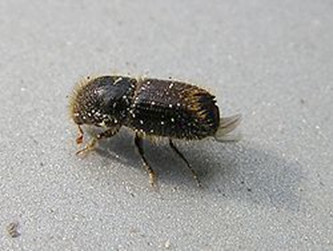
Ips typographus, the bark beetle. Natural process to a conservationist, prospective commercial nightmare to a forester. The solution – cooperative planning! (Photo credit: Daniel Adam)Ips typographus, the bark beetle. Natural process to a conservationist, prospective commercial nightmare to a forester. The solution – cooperative planning! (Photo credit: Daniel Adam)

Where the EC Guidelines are applied to wild areas, rather than core wilderness, there is a greater degree of accommodation with intervention management – whether for more traditional conservation practice or where there is mixed land use with some timber extraction, grazing or other type of human impact. Although by definition applying to EU member states, the Guidelines will also help influence management of wilderness and wild areas in non-EU states.

Next steps

There are three aspects to active implementation of the EC Guidelines:

  1. Their dissemination to all relevant parties, particularly conservation NGOs involved with field level management, together with explanation of their value and use
  2. Identification of funding sources for implementing the Guidelines, with advice where needed on accessing these
  3. Highlighting key examples for application of the Guidelines, which can serve to instruct or catalyse wider usage

The need for consensus

In adopting the EC Guidelines, it is important to ensure prior consultation and engagement with relevant parties.

This should include a sensitive approach to the interests of ‘traditional’ conservation: recognizing for example that non-intervention may not be appropriate in areas harbouring species that are globally threatened.

Equally, issues of importance to landholders, such as management of possible bark beetle outbreaks and ensuring compensation for loss of productive use, should be discussed and planned in advance.

The EC Guidelines can be adopted in their entirety for core wilderness zones, but with varying degrees in other areas – depending on circumstances.

Background to the guidelines

An EC contract for providing input to development of Guidelines was awarded to a consortium of Alterra, Eurosite and PANParks Foundation in 2011.

The EC Guidelines have been examined by the Expert Committee on Nature 2000 Management, and progressed through the EC inter-service consultation process.

Securing them has been a key objective of Wild Europe, which was involved in scripting and coordination of the Resolution for improved protection of European wilderness in 2008 signed by over 140 organizations, which led to development of the Guidelines.

Non-intervention is the lowest impact, most natural element in a range of practices that also includes naturalistic and intervention management.

What is non-intervention management?

So what are the different approaches to management?

‘Non-intervention’ management, as explained above, involves in effect a zero engagement approach, allowing natural processes to determine the form and distribution of habitat and species, with minimized or no artificial interruption in the natural succession of vegetation.

Natural processes at work – will this lake eventually silt up? Perkuć Reserve in Augustów Primeval Forest, PolandNatural processes at work – will this lake eventually silt up? Perkuć Reserve in Augustów Primeval Forest, Poland

Climax vegetation? Old growth beech forest allows little competition in Biogradska Gora National Park, Montenegro (Photo credit: Snežana Trifunović)Climax vegetation? Old growth beech forest allows little competition in Biogradska Gora National Park, Montenegro (Photo credit: Snežana Trifunović)

A larger scale future for coastal wilderness? Non-intervention as a buffer against rising sea level – defensive walls were breached to create salt marsh on former cropland. Abbotts Hall Farm, UK (Essex Wildlife Trust)A larger scale future for coastal wilderness? Non-intervention as a buffer against rising sea level – defensive walls were breached to create salt marsh on former cropland. Abbotts Hall Farm, UK (Essex Wildlife Trust)

Natural processes include: carnivore/herbivore action, the nutrient cycle (dead wood being a key element), wind, fire, disease, pests (including bark beetle), hydrological action, siltation – and genetic evolution itself.

Introduction of the EC Guidelines will in particular help address the current situation whereby conservation management that is traditionally more focused on particular species can involve intervention activities which conflict with wilderness principles that emphasise undisturbed landscape and process.

An original motive behind development of the EC Guidelines was a misconception in conservation practice to assume Natura 2000 areas should be kept in their condition at the time of designation. This has been an issue for example in Sweden as well as several Central European countries following their accession to the EU and establishment of the N2000 network.

The principles underlying non-intervention involve acceptance that there may as a result be localised diminution in some species, but that integrity and naturalness of ecosystems is an important conservation objective in itself, from which other species will gain.

Addressing climate change

Other benefits from non-intervention, which can be combined with large-scale restoration, include alleviating climate change through absorption of carbon emissions, with ‘wilderness’ forest having a considerably higher storage capacity than its managed equivalent. Equally, whether applied to natural forests and peatlands on upland watersheds or forests in lowland sinks, non intervention can mitigate flooding and alleviate water pollution.

Similarly, non-intervention can provide more cost-effective defences against rising sea levels than manmade infrastructure.

Non intervention does not of course mean no management: ongoing input is still required for protection, research, education and visitor guidance. However it does represent a cost-effective approach that can free resources for higher priority conservation actions elsewhere.

Naturalistic management

The naturalistic management approach involves using extensive grazing to maintain a mosaic of different habitats, rather than leaving natural progression to occur unhindered towards climax vegetation – often of forest.

The overall aim of its exponents is to ensure maximum wildness of landscape and process along with richness of biodiversity for which mixed habitat with ecotones is important.

This approach should so far as possible involve naturally occurring species including bison, deer, boar, beaver.

Substitute species are also proposed, such as auroch-type breeds, Konik horses and Heck cattle. There is general consensus that these latter species should not be used in areas of wilderness.

Natural browsers help maintain mixed habitat – European bison in Vermuelen, Netherlands (Photo credit: Twan Teunissen, FREE Foundation)Natural browsers help maintain mixed habitat – European bison in Vermuelen, Netherlands (Photo credit: Twan Teunissen, FREE Foundation)
Mixed land use in this montane habitat – the mire with cotton sedge may be natural, non-intervention, but what of the grasslands around it? Chamois or cattle....? Glarus Alps, SwitzerlandMixed land use in this montane habitat – the mire with cotton sedge may be natural, non-intervention, but what of the grasslands around it? Chamois or cattle….? Glarus Alps, Switzerland
Large herbivores such as this ‘auroch’ can help retain biodiversity-rich mixed habitat. A returned native ... or engineered surrogate? (Photo credit: Pierre Devilliers CMS)Large herbivores such as this ‘auroch’ can help retain biodiversity-rich mixed habitat. A returned native … or engineered surrogate? (Photo credit: Pierre Devilliers CMS)

A key element of such naturalistic management involves the need to calculate the intended habitat impact of grazing and browsing, adjusting the mix and number of animals involved.

Issues for consideration include welfare (management of disease, age, starvation), health (leaving of carcasses – important for scavenger species), addressing conflict with other land uses (eg interaction between wild species and livestock), public safety, management and control.

Cost effectiveness

Both non-intervention and naturalistic approaches are key elements in restoration schemes for wild areas (as opposed to wilderness) – particularly where large scale re-establishment of natural habitat is occurring on land formerly used for agriculture.

They can be highly cost-effective as an alternative to traditional interventionist management, especially over large areas, allowing resources to be diverted to alternative conservation objectives. However there would still be a requirement for activities involving protection, monitoring, research and visitor management.

Close cooperation is required with local landholders and communities. This can be enhanced when benefits from ecotourism and other sources of income and employment become apparent.

Intervention management

Non-intervention and naturalistic management contrasts with more man-centred approaches often adopted – particularly in traditional conservation.

These usually focus on a particular habitat or species and involve a cycle of highly interventionist actions – such as coppicing of woodland, maintenance through felling of trees and shrubs on heathland, topping and mowing of grasslands, mechanical dredging or reed cutting in wetlands.

Such practices are regarded as inimical to the principles and philosophy of wilderness. However, where a degree of man-centred intervention management has to occur in support of a key species or habitat type, it should be undertaken with great sensitivity to natural (aesthetic) landscape and process.

Intervention management is not acceptable in core areas of wilderness.
Wild Nephin’ launched on former commercial forest land

Support from Irish Prime Minister, EU President

Irish Prime Minister, Enda Kenny TD, at Wild NephinIrish Prime Minister, Enda Kenny TD, at Wild Nephin

11,000 hectares of former commercial forest, blanket bog and grassland has been inaugurated and acclaimed as Ireland’s first area subscribing to key principles of wilderness.

Hailed as a major initiative by the Irish Prime Minster, Enda Kenny TD, who held office in 2013 as EU President, Wild Nephin is set in spectacular landscape in the North West.

It is unveiled at a time when new sites for wild nature are being assessed and created across Europe, including restoration or ‘rewilding’ of former forestry and farmland which is often unviable for commercial production. The economic and social benefits of wildness for local communities can provide an additional motive.

15 years restoring wild biodiversity

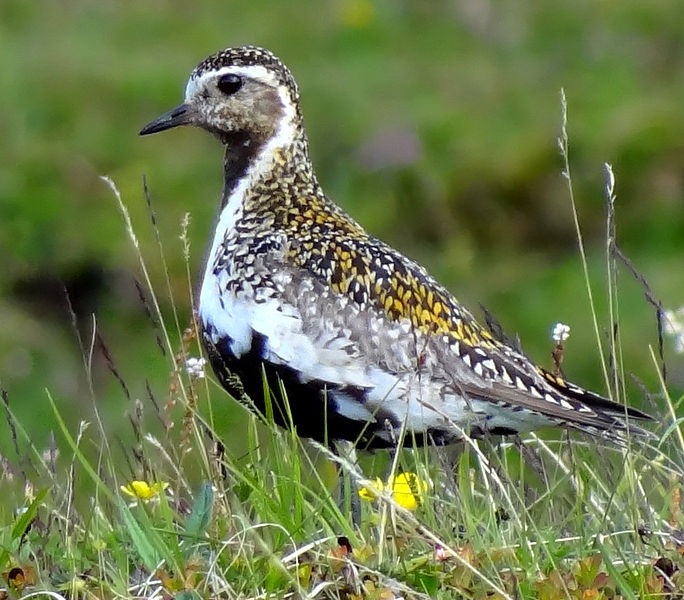
Return of the golden plover (Photo credit: Bjørn Christian Tørrissen)Return of the golden plover (Photo credit: Bjørn Christian Tørrissen) ...and the red squirrel…and the red squirrel Icon of Atlantic wilderness – the white tailed eagle (Photo credit: Yathin S Krishnappa)Icon of Atlantic wilderness – the white tailed eagle (Photo credit: Yathin S Krishnappa) Bill Murphy – a visionary in his elementBill Murphy – a visionary in his element

This initiative is the vision of Bill Murphy of Coillte, Ireland’s forestry agency, together with Denis Strong of neighbouring Ballycroy National Park – with both organizations contributing their landholdings. The Mayo County local authority brings a third element, regional development planning, to the partnership.

Following a 15 year restoration period during which the plantation forest will be remodelled with native pine and deciduous trees, drainage channels blocked, invasive rhododendron cleared and infrastructure removed, there will be no further human interventions – leaving the landscape governed entirely by natural processes.

There are plans to reintroduce species such as golden plover, merlin and red squirrel, and real possibilities for attracting white-tailed sea eagle – already nesting further down Ireland’s Atlantic coastline – and perhaps osprey.

In place of traditional timber production, facing long-term decline in a relatively remote location, will be carefully targeted tourism projects that build on the popularity of Westport and surrounding villages as a destination. Nephin is to be promoted as Ireland’s first wilderness.

A significant model for Europe

Wild Nephin has a number of aspects that make it a model for replication elsewhere:

  • The conversion of a less productive part of Coillte’s commercial plantations from timber production to biodiversity restoration, non-intervention management and nature tourism provides an attractive example for forestry agencies elsewhere in Europe
  • Use of socio-economic appraisal to underpin this initiative, with earnings and employment from tourism and ancillary activities outweighing income from forestry under any reasonable scenario for future timber prices.
  • Close cooperation between key organizations with a long term planning framework that combines ecological restoration with tourism promotion and regional economic development.
  • Wild Nephin marks a key step in the advancement of wilderness concepts along with non intervention management practice.
  • Its creation in one of Europe’s most developed countries is paralleled by new initiatives in Austria, Slovakia, Romania and France.

Conference addresses a growing trend

The Wild Nephin initiative was unveiled at a Conference on 15th May 2013 in Westport, County Mayo which addressed restoration of large natural areas in a modified landscape.

Introduced by Bill Murphy with Denis Strong, the conference began with a personal message of support from Enda Kenny, Irish Prime Minister and European Union President in 2013.

The Conference brought together experts, representing national and international organisations, to share information and exchange ideas on current and possible future approaches to rewilding modified landscapes particularly former plantation forests and other impacted landscapes.

Chaired by Toby Aykroyd (Wild Europe) and Zoltan Kun (PANParks), it included contributions from:
Jensen Bessell, director of Baxter State NP in Maine
Micheal O’Briain, European Commission, DG Environment
Gerald Murphy, managing director of the Coillte forestry agency
John Fitzgerald, director National Parks and Wildlife Service
Ethna Murphy, Irish Tourist Board

More information

See Bill Murphy and Toby Aykroyd in Nephin video

Read Irish Times, Monday April 8th, 2013 Wild about Nephin Beg

Nephin’s panorama of forest, marsh and grassland stretches into the distanceNephin’s panorama of forest, marsh and grassland stretches into the distance