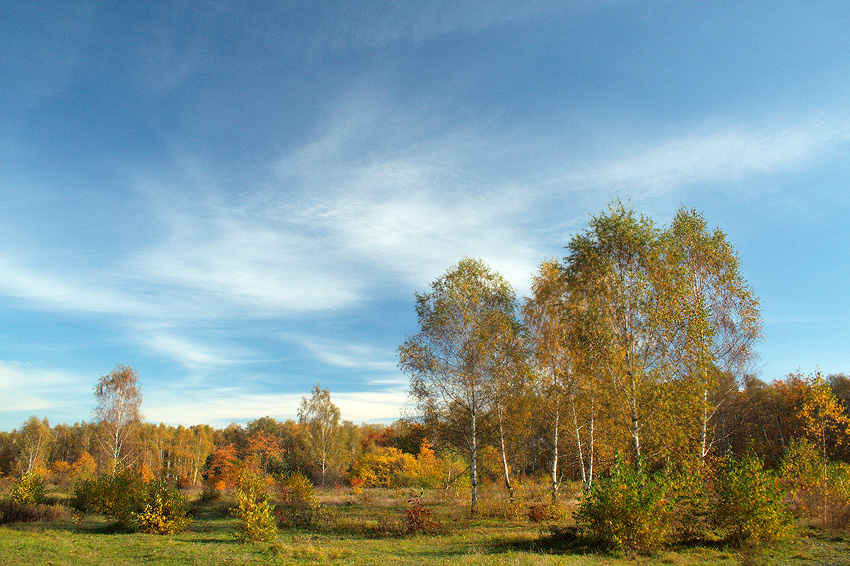
CBD Outlook Report highlighted opportunity for large scale restoration across Europe

Wild area restoration in Europe - of global significanceWild area restoration in Europe – of global significance

Potential for restoration in Europe received significant confirmation from the CBD in its 3rd Global Biodiversity Outlook report (2010).

Published in advance of the Nagoya Conference to address the world’s declining biodiversity, the Report cited a huge potential for ecological restoration on abandoned farmland to support global biodiversity strategy.

“…There are opportunities for rewilding landscapes from farmland abandonment in some regions – in Europe, for example, about 200,000 square kilometers of land are expected to be freed up by 2050. Ecological restoration and reintroduction of large herbivores and carnivores will be important in creating self-sustaining ecosystems with minimal need for further human intervention.” CBD 3rd GBO, 2010, page 75

The role of undisturbed old growth forest in particular is emphasized in the Report, not only through storing significantly greater quantities of carbon than its managed counterpart, but via the process of ‘carbon fertilization’ which could augment this capacity further. Similar arguments apply to undisturbed wetland and peat areas.

Against a backdrop of failure to meet most of the 2010 Biodiversity Targets, the Report remains an important indicator for the 2020 UN decade on ecosystem restoration.

For further detail on the CBD Global Biodiversity Outlook Report, see: https://www.cbd.int/gbo3/

Update from 2018 JRC Report

A 2018 report by the Joint Research Council cited an annual increment of some 280,000 hectares being added annually to abandoned land, which it forecast would total around 5.6 million hectares, some 3% of agricultural land, by 3020. A further 15 – 20 million hectares are “at high potential risk” of abandonment – ie have promising potential.

Spain (particularly North/Northwest) and Poland (particularly around the Chelmsko-zamojski region) are cited as contributing almost a third of this. Much of the remainder is focused in Southern and Eastern Romania, Southwestern France, Southern and Central Spain, Portugal, Cyprus, Latvia and Estonia.There is thus considerable opportunity for restoring large networks of natural ecosystem areas in the Restoration Strategy forthcoming from the 2030 EU Biodiversity Strategy published in May 2020.

JRC report available here.

The potential for restoration

There is now unprecedented opportunity for restoration of natural habitats and processes across Europe. This could create a series of very large wild areas, linked by habitat corridors into a functioning ecosystem

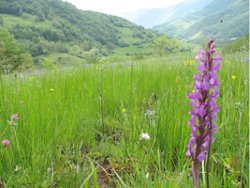
Abandonment of grazing uplands, Picos de Europa, SpainAbandonment of grazing uplands, Picos de Europa, Spain

Natural regeneration is already occurring, especially in remoter regions, with partial or total abandonment of some 40 million hectares of former grazing land leading to reappearance of shrubs and trees. There are also a growing number of restoration initiatives planned through managed intervention.

This opportunity is underwritten by two main factors.

On the one hand, more marginal areas of farmland and forestry are becoming increasingly uneconomic. Despite recent increases in commodity prices and rising global population, this trend is likely to be sustained by changes in agricultural practice together with reform of the Common Agricultural Policy (CAP) and pressure for free trade through the World Trade Organization.

At the same time there is growing appreciation of the wide range of economic and social as well as environmental benefits offered by such areas. (see Benefits section)

This in turn offers considerable scope for restoration initiatives that combine wilderness and biodiversity objectives with utilisation of these benefits for local farmers, landholders and communities.

Promoting new wild landscapes

Red deer along with other ungulates can help maintain a diverse mosaic of wood and grasslandRed deer along with other ungulates can help maintain a diverse mosaic of wood and grassland

In addition to occurring naturally, restoration can also be encouraged through managed interventions, particularly in areas which have been substantially modified with substantial or complete removal of original vegetation.

These interventions may include managed planting from external seed sources, breaking up ground compacted by heavy grazing and reinstatement of natural processes – such as re-establishment of fluvial meanders or removal of artificial drainage.

At the same time, there is a need to recognise the importance of herbivores in the maintenance of diverse vegetation structures. By creating more habitats, for example glades in forest and mosaics of woodland and grassland, this that can reconcile the need to maximize biodiversity (as measured in number of species) whilst promoting principles of wildness as opposed to management through direct human intervention. In core areas of wilderness and wild land, where non intervention management is practised, this role is undertaken by deer, bison and beaver.

Elsewhere, there is a growing trend to use ‘naturalistic’ management involving extensive grazing by livestock, some species of which are represented as substituting for their natural ancestors – eg Heck cattle for the extinct forest dwelling auroch and Konik ponies for the ancient tarpan.

Vision for a bright futureVision for a bright future

A vision for the future

There is a historic potential for putting into practice this vision for landscape scale restoration of large natural habitat areas.

Success in developing the vision will require a coordinated consensus of interested parties reaching beyond conservation to encompass government, landholding, forestry, farming, business, local community and urban social interests among many others.

If this can be achieved, the vision has every chance of being realized.


Reintroductions

In addition to reinstatement of natural habitat and process, restoration can involve reintroduction of species previously occurring in a particular area.

Some reintroductions occur naturally, such as the return of the osprey to England or the spread of wolf into South Eastern France from the Italian Alps.

Bringing biodiversity and tourism benefits

Many reintroductions involve forward planning, including beaver now reintroduced to 26 countries across Europe, or European bison to the Rothaargebirge region in North-Rhine-Westphalia, Germany.

Such reintroductions are provided for in Article 22 of the EU Habitats Directive and can bring significant enrichment to local biodiversity. To many, they also mark the fulfillment of a responsibility by man to reinstate a species he has extirpated.

Such reintroductions can also be controversial and require careful handling with full prior consultation, particularly among local communities and landholders where releases are to occur.

However, they can also help restore more balanced natural processes and enable enrichment of biodiversity as well as bringing economic benefits. Beaver create a wider variety of wetland habitats that support yet further species including mammals, birds, amphibians. Fish and invertebrates.

Similarly, by maintaining a mosaic of forest and grassland, European bison can help support a wider range of fauna and flora than would occur if a monoculture of climax arboreal vegetation were to occur.

There is increasingly widespread use of ‘surrogate’ species in place of their wild counterparts for naturalistic management of vegetation – including Heck cattle as a substitute for the extinct auroch and Konik horses for Tarpan, although there is some question over how far such comparisons reflect genetic reality.

Economic benefits from reintroduction

The wolf has brought prosperity to local communities in Abruzzi

Reappearance of species formerly present can provide a major tourist attraction, of significance to the local and even regional economy.

In Scotland, wildlife tourism brings some £65 million annual revenue together with employment for nearly 2,800 – often in relatively poor rural areas. Reintroduction of Sea Eagle, the fourth largest in the world, to the Isle of Mull now produces significantly more income to local communities than farming.

In Abruzzo National Park, only 130 kilometers from Rome, local farming communities now gain better livelihoods from tourism based on the return of the wolf to restored areas of natural habitat than were previously earned from livestock herding.

Located in the Central Apennines the National Park covers 44,000 hectares of mountain forest and grassland and enjoys the Marsican brown bear as its symbol.

Reintroductions can bring similar economic benefits for local landholders and communities across central and eastern Europe as well. This can have a particularly stong impact in remoter areas, where traditional agricultural and forestry practice is less viable. However, alongside reintroduction programmes, there is often a need to focus on capacity building – eg provision of adequate local accommodation, guidance and general services if local communities are to gain maximum benefit from nature tourism.

Provider of valuable engineering services for wetland habitat

Beaver are particularly prized for their economic benefit. Negative impacts from the 26 countries where reintroduction has occurred over the last 80 years have been almost without exception very limited and localised.

Positive benefits on the other hand have included flood mitigation, alleviation of pollution – together with revenue and employment from nature tourism. Because beaver consume a low calorie diet they forage for up to 18 hours a day, thus making ideal subjects for wildlife watchers.

Vaclav HavelVaclav Havel

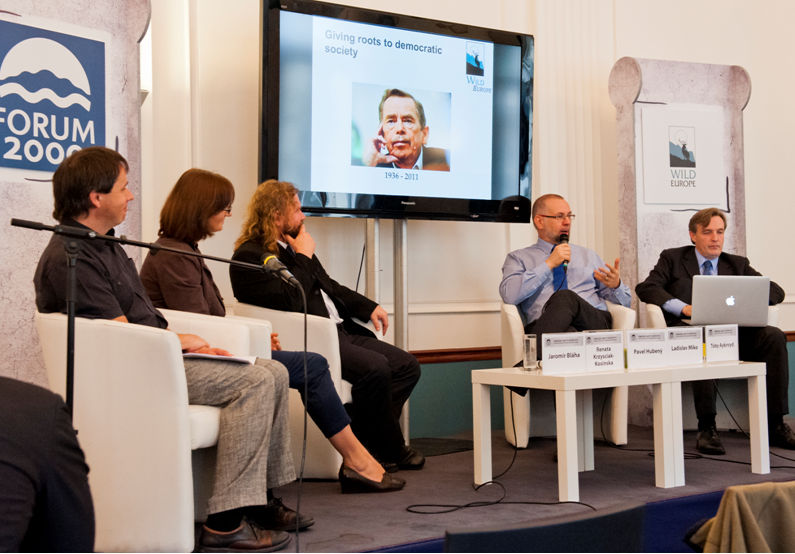
Vaclav Havel 1936 – 2011

Statesman, playwright, hero of countless millions across Europe for his enduring struggle to secure freedom, finally realized in the Velvet Revolution of 1989.

Even while presiding over the rebuilding of his nation, as President of Czechoslovakia and subsequently the Czech Republic, the poet and the visionary in Vaclav Havel recognized the value of the wild in restoring meaning to our crowded lives. It was his memorable rhetoric which, in May 2009, opened the first EC Presidency Conference on wilderness, held in Prague.

“We have lost sight of eternity and are destroying nature for future generations.”

Few people deserve to be called ‘great’. Vaclav Havel was one of those. His name and memory will live on, undimmed, in our work to safeguard Europe’s last wild areas.

Doug Tompkins (Credit: Sam Beebe/Ecotrust)Doug Tompkins (Credit: Sam Beebe/Ecotrust)

Doug Tompkins, the passing of a giant

Wilderness and wildlife lost one of its greatest proponents with the death of Doug Tompkins from hypothermia following a kayaking accident in Chile.

Highly successful businessman, founder of North Face and Esprit clothing multinationals, Doug increasingly realised the value and vulnerability of the world’s last wild spaces.

He moved to South America with his dearly loved wife Kris, where they acquired over 850,000 hectares of largely pristine forest and grassland in Patagonian Chile and in Argentina, creating a series of protected wilderness areas to be given as National Parks to the two countries. Alongside these a network of local enterprises was initiated for nature tourism and sustainable, organic agriculture.

Doug also had a number of interests in Europe, becoming a much valued advisor to the Conservation Carpathia Foundation in Romania, where the scale and practicality of his vision well matched this other great endeavour to preserve one of Europe’s last great mountain wildernesses with its wolf, bear and lynx.

Doug’s conservation was underpinned by a profound belief in man’s oneness with nature. He regarded his tireless endeavours, which included campaigns on a wide variety of environmental issues, as ‘paying rent for his time on Earth’.

He leaves behind a string of priceless natural landscapes, now to be protected in perpetuity.

More than that, his legacy lives on in the minds of countless individuals who had the privilege to know and be inspired by Doug and his brand of forthright but humble genius. Our hearts reach out to Kris and all Doug’s family.

9th December 2015

Successful wilderness forum at the European Parliament

Wilderness in the political arenaWilderness in the political arena

Almost exactly three years after the EU Resolution in 2009 calling for improved support for wilderness passed by 538 votes to 19, a policy forum ’Protecting Wilderness in Europe’ was organized by PAN Parks and Wild Europe in the EU Parliament on 31st January 2012.

Presentations were opened by Pavel Poc, MEP (Czech Republic) who hosted the proceedings. He cited the vote in 2009, and suggested that the time was ripe for the profile of wilderness to be raised further.

Stefan Leiner, Head of Natura 2000 Unit (EC DG Environment), then outlined how the wilderness agenda was played an important role in Natura 2000. He confirmed that “wilderness is an essential mainstream element of the European Biodiversity Strategy.”

Targets needed for wilderness

Toby Aykroyd of Wild Europe Initiative stressed the need to establish targets for wilderness in Europe. A figure of 4-5% of land area was an ambitious but achievable goal. It could be gained by further reinstatement of near-wilderness together with ‘rewilding’ of marginal and abandoned farmland and forestry.

He echoed the information in Stefan Leiner’s presentation that some 2.3% of the EU land area, lying within the N2000 network, is already protected for its wilderness attrributes.

Zoltan Kun, director of PANParks, introduced their Million Project which aims to protect one million hectares of true wilderness across Europe. He also unveiled a new study on the contribution of wilderness to payment for ecosystem services titled ’The Economics of Wilderness’.

Michael Zika, of WWF Austria, drew attention to key initiatives: the work of Rewildling Europe and momentum in Romania for preserving old growth forest; this had been spurred in late 2011 from a petition that now had over 100,000 signatures.

Hajnalka Schmidt then outlined some successful corporate ventures involving wilderness. Keijo Salenius, business entrepreneur, explained how his tourism and education undertakings were supporting wilderness around Oulanka National Park in Finland.

Key requirements for wilderness

Participants including representatives of the European Commission, NGOs and scientific organizations took part in discussions on key themes:

  • The important role of wilderness in delivery of the Green Infrastructure programme, if supported by appropriate awareness and policy development
  • The need for implementation of the EU Biodiversity Strategy at national level to provide adequate focus for protection and restoration of wilderness areas
  • More effective use of Neighbourhood Agreements, transition arrangements and trade & aid instruments to promote wilderness in non EU states. Caucasus was cited as an area that could benefit substantially here.
  • Increased emphasis on translating multiple non extractive benefits of wilderness into funding sources for conservation generally

The European Parliament vote

The European Parliament passed a Resolution in February 2009 calling for improved protection, funding and promotion of wilderness areas. It was adopted with 538 votes in favour and only 19 against, representing a massive cross party endorsement and a strong popular mandate for action.

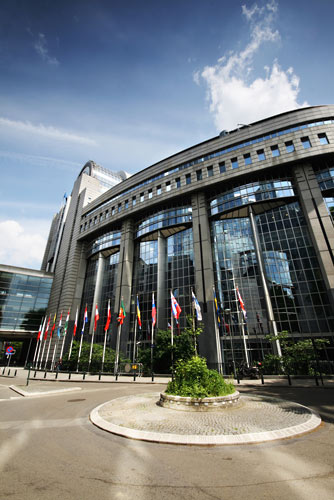
…. a massive endorsement for improved protection of wilderness in Europe…. a massive endorsement for improved protection of wilderness in EuropeThe EU Parliament in StrasburgThe EU Parliament in Strasburg

Aspects requested by the Resolution

  • Develop an EU wilderness strategy, coherent with the Birds and Habitats Directives and setting priorities
  • Devote special attention to the effective protection of wilderness
  • Detect immediate threats linked to wilderness
  • Give a special status to and stricter protection for wilderness zones in the Natura 2000
  • Strengthening of wilderness-related policies and measures
  • Co-operation (by the EC and Member States) with local non-governmental organisations, stakeholders and the local population to promote the value of wilderness
  • Member States to exchange their experiences of best practices and lessons learned about wilderness areas

This Resolution was based on a Report from the Parliamentary Committee on the Environment, Public Health and Food Safety. The Resolution also called on the European Commission to recognize the Wild Europe initiative.

The Resolution reflects a growing awareness of the value of Europe’s remaining wilderness and wild areas, and the urgent need to protect and restore them.

Wild Europe provided a collective presentation at the European Parliament before adoption of the Resolution, and is developing a strategy for representation of wilderness and wild area issues.

EC Presidency Conference on Wilderness and Large Natural Habitat Areas


Keynote speakers for the opening session (left to right): Toby Aykroyd (Director, Wild Europe), Ladislav Miko (Environment Minister, Czech Republic), Vaclav Havel (former President, Czech Republic), Mike Hammell (Acting Director, European Commission, DG Environment), Luc Marie Gnacadja (Executive Secretary, United Nations CCD)Keynote speakers for the opening session (left to right): Toby Aykroyd (Director, Wild Europe), Ladislav Miko (Environment Minister, Czech Republic), Vaclav Havel (former President, Czech Republic), Mike Hammell (Acting Director, European Commission, DG Environment), Luc Marie Gnacadja (Executive Secretary, United Nations CCD)

The EC Presidency Conference on Wilderness and Large Natural Habitat Areas, held in Prague on 28/29 May 2009, developed a series of policy recommendations for protection and restoration of Europe’s wilderness and wild areas.

Introduced by Vaclav Havel, former President of the Czech Republic, it was organized over a two day period by the Wild Europe partnership and hosted jointly by the EU Presidency (Czech Republic) and the European Commission.

Over 240 participants from 36 countries took part, representing government ministries, conservation agencies, NGOs and academic institutions, as well as a wide range of interests from landowning, agriculture, forestry, business, academic and other sectors.

The Conference assessed a number of key issues, including:

  • The definition and location of wild areas
  • Determining their contribution to halting biodiversity loss
  • How they support the Natura 2000 network of protected areas
  • Recommendations for improved protection within the existing legal framework
  • Review of opportunities for restoration of large natural habitat areas
  • Defining the value of economic, social and environmental benefits from wild areas

An action agenda for Europe’s remaining wild areas

The participants of the Prague conference propose 24 recommendationsThe participants of the Prague conference propose 24 recommendations

A key outcome was the development of a ‘Message from Prague’, containing 24 recommendations identified by the participants, including policy

development, research and awareness building as key elements for an ambitious and groundbreaking agenda including policy development, research, awareness raising and partnerships which will create a wilder Europe, both in EU and non EU regions.

Europe should be proud and treasure the wilderness it still has, but it needs to do more” said Ladislav Miko, Minister of the Environment of the Czech Republic. Wilderness and wild areas form less than one percent of Europe’s surface but are a vital part of its natural heritage. Many of them are facing imminent threats that require a rapid and effective response.

Vaclav Havel, former President of the Czech Republic, commenting on the social and ethical aspects of the issue noted that “We are blurring natural boundaries: forests are no longer forests, meadows are no longer meadows. We have lost sight of eternity and infinity and are destroying nature for future generations.

Economist and study leader of the Economics of Ecosystems and Biodiversity (TEEB) report Pavan Sukhdev, noted that “We are prisoners of a system which favors manmade capital over national capital and human capital and favor private goods over public goods… that is the problem.” Wild areas are the insurance for our future and investing in them remains critical.

Wilderness – the building block for a greener Europe

Over the last 40 years, some 25% of biodiversity on the planet has been lost due to the destruction of habitats, overexploitation, pollution, and increasingly climate change and invasive species. In the EU alone, 60% of most valuable habitats are in unfavorable conservation status. “The commitment by governments to halting the loss of biodiversity by 2010 seems increasingly out of reach and Europe will have to re-double its efforts if it is to come close to this target. European wilderness is the building block for a greener Europe” said Ladislav Miko.

The conference inspires us all to start rethinking our relationship to nature. During the Swedish Presidency special attention will be given to the links between biodiversity, ecosystem services, climate change, and human well being” stated Asa Norrman, Nature Director, Ministry of the Environment of Sweden, closing the conference.

Achievements & Objectives – Summary

Wild Europe with its partners has a rolling programme. Many activities and objectives are not promoted on our website, so if you are interested in receiving more information on any particular topic, please contact: info@wildeurope.org


Main achievements for 2018/19

1. Drafting of Strategy for Old Growth Forest Protection from recommendations of 2017 Brussels Conference, involving 149 participants from 28 countries

1a. Initiation of Strategy – FZS partner programme through Griffiths global primary forest initiative

Of the 550,000 euro raised as a result of Wild Europe’s October 2017 conference on OGF protection, some 320,000 euro was provided for the European element of the primary forest project funded by Griffiths, and undertaken by Frankfurt Zoological Society which has been working on the following projects:

  • Updated mapping of OGF locations with Humboldt University (Berlin)
  • Development of a forest carbon model
  • Planning and establishment of community enterprise in lieu of logging in East Slovakia as part of the Wolf Mountains initiative
  • Wood fuel bioenergy project
  • Link to Griffith University (Australia) Global Primary Forest Protection network, reference international trade and policy

FZS has also now secured representation on the IUCN Primary Forest Task Force through this project

1b. Initiation of strategy for old growth forest protection – other projects

A range of other projects arising from the conference were developed in parallel:

  • Report developed on protection incentives for OGF in non-state owned areas
  • Further consultation on a standard definition structure for old growth forest
  • Representation of OGF and protection strategy to 50 Bern Convention member state (ministry) parties, generating positive feedback
  • Development of a freehold/leasehold structure for long-term protection on privately owned land
  • Proposals for working party and best practice collation with EUSTAFOR state forest agency association

2. Large Wilderness Area programme – Ongoing input to partners’ model wilderness and wild areas:

  • Sumava National Park– Czech Republic. Agreement by the Czech government to our wild nature enterprise initiative for Sumava NP, which also proposes links to BayerischerWald NP in Germany. This is thethird, non-extractive enterprise phase of our support here.
  • Romanian Carpathians– Fagaras Mountains. As an approved organisation with the Cambridge Conservation Initiative (CCI), we provided introduction for Fundatia Conservation Carpathia (FCC) to CCI’s Endangered Landscape Programme, and input to its funding request. A grant of 5 million Euro subsequently gained. Also input to enterprise and education elements aiming at establishment of a model 250,000 ha National Park in the Fagaras Mountains
  • Bialowieza Forest– Ongoing consultation for our concept plan for significant enlargement of the core area into the UNESCO World Heritage site, first suggested in 2014 and based on community wild nature enterprise and extensive restoration
  • Wolf Mountains programme (East Slovakia, West Ukraine, South East Poland) – follow up on the non-extractive enterprise projects from the specification to Conservation Capital, initially provided and 50% funded by Wild Europe, with Aevis Foundation and Frankfurt Zoological Society as partners

3. National level

  • IUCN France– further engagement through Wild Europe’s membership of the Wilderness Group, with funding for a mapping exercise, identifying model wild and prospective wilderness areas, and strategy for addressing restoration opportunities
  • Rewilding Britain– ongoing support, including for the multi agency Pumlumon area initiative in central Wales which recently won 5 million Euro from the ELP. A new project has been identified for the Peak District National Park in Central England, and costed proposals put to government for large-scale natural habitat restoration to sequester carbon emissions
  • German government wilderness strategy– definition for Federal target at 2% of national territory reaffirms linkage to Wild Europe definition
  • Slovakia– correspondence with government, expressing appreciation of proposals for prospective transfer of national park management to the Environment Ministry

4. Development of key topic/strategy agendas

  • CAP reform proposals promoted, involving reallocation of payments towards ecosystem service provision, modification of GAEC regulations, input of Ecological Focus Area supplements tradable at regional level, and general promotion of a stronger socio-economic agenda in coordination with land user associations.
  • Definition for wild areas, now under consultation. We are seeking to parallel our 2013 wilderness definition, adopted for the EC Management Guidelines and Wilderness Register. The aim is to provide flexible criteria for wildness and its restoration with standardized application in any biogeographic and cultural circumstance.
  • Working partnership with a legal network and newly formed conservation body, developing a new form of long-term legal protection for wilderness and wild areas on private land, including those with old growth forest.
  • EC Guidelines: Phase II project developed and proposed

5. Strengthening Wild Europe’s organizational capacity

  • Wild Europe office opened at the IUCN building in Boulevard Louis Schmidt, Brussels. Wild Europe’s EU legal foundation status assessed in 4 countries for post Brexit scenario
  • Alternative national legislatures assessed for Wild Europe future constitution post Brexit

Further information is available on all these initiatives, via info@wildeurope.org

.

Main achievements for 2019/20

1. Implementation of old growth/primary forest strategy

  • Wild Europe OGF/wilderness conference in Bratislava 20/21stNovember 2019
  • Lobbying for total protection of old growth/primary forest in the EU
  • Further funding and launch of Francesco Sabatini forest mapping
  • Production of definition & management principles for OGF/primary forest
  • Support for developing carbon benefits model of OGF
  • Creation of IUCN motion for improved OGF protection (Daniel Vallauri) based on WEI Strategy for Protection
  • State agency project: best practice and set-aside represented to EUSTAFOR
  • Agreement on value of OGF secured from Presidents of CEPF & EUSTAFOR

2. Further support for wilderness and wild areas

  • Wild Europe conference in Bratislava 20/21stNovember sets key targets
  • Lobbying for 10% wilderness target in EU and non-EU states
  • Support for FCC Romania, including 5.5 million Euro facilitated from ELP
  • Extended protection agreed by Czech government to Sumava NP
  • Substantial inputs to Clima Carpathia mega protection initiative
  • Support for Central European Wolf Mountains project
  • Finalisation of freehold/leasehold non-state landowning structure in UK to support very long-term protection & restoration of wild areas

3. Input for national strategies

  • Proposal for France Sauvage NGO network, including support for Macron vision of 10% haute naturalité/protection forte
  • Funding for mapping project to identify key wilderness areas in France
  • Proposals for implementation of German 2% target: PES potential
  • Finalisation & promotion of the definition for ‘wild areas’ in Europe
  • Launch of enlarged Hohe Tauern NP, Austria wilderness (Wild Europe criteria)
  • Rewilding Britain – through board, including input to English Tree Strategy

4. Development of key topic/strategy agendas

  • Membership of EC Working Party on Forests & Nature for 2020 EU Biodiversity Strategy implementation
  • Development of briefing materials for the Working Party
  • Inputs to updated 2015 EC Guidelines for Forest Management in N2000
  • Input to EU Biodiversity and Forest Strategies
  • Input to EU Restoration Strategy & targets, building on 2010 Strategy
  • Sound Science initiative launched for forest bioenergy campaign
  • Further input to 2020 CAP programme
  • Combatting bias in EC consultation on forest bioenergy

5. Promotion of conservation infrastructure development

  • Meeting facilitation and input for IUCN Rewilding Task Force
  • Development of proposals for European Investment Bank role
  • Proposals for linkage between EC N2000, Bern Convention Emerald Network and UNESCO WH and Biosphere networks

6. Strengthening Wild Europe’s organizational capacity

  • Stichting foundation structure (Netherlands legislature) chosen and prepared
  • Zoltan Kun appointed Head of Conservation, Erika Stanciu appointed Head of Policy

 
Members of the WWG mapping sub-group discuss the latest techniques for a wilderness register.

Wilderness Working Group

The Wilderness Working Group (WWG) brings together leading wild area practicioners from across Europe. The Group’s original remit is to develop policy and propose practical initiatives for protection and restoration.

It is chaired by Erika Stanciu (Wild Europe’s Chair), and its work includes assessing practical definitions, mapping, support for new initiatives such as the Wilderness Register, and fund raising proposals for a Pan-European communications strategy.

The WWG has been comprised of participants from 15 countries: Austria, Canada, Czech Republic, England, France, Finland, France, Hungary, Netherlands, Romania, Scotland, Slovakia, Sweden, Ukraine and the USA. Its membership includes NGO representatives, national park directors and scientists.

Technical sub-groups have been created, to help formulate a definition for wilderness and wild areas. And, most recently, to review and propose improved approaches for mapping and monitoring – in parallel with development of the Wilderness Register.

A policy discussion at IUCN office in Brussels

Other meetings

Wild Europe develops its policies from a wide range of inputs, with a series of ad hoc meetings which discuss particular topics.

In the photo to the left, a group of NGO representatives examines proposals. Participants included, from left to right: Michael Zika (WWF Austria), Feiko Prins (Natuurmonumenten, retd), Joep van de Vlasakker (Flaxfield Nature Consultancy, Belgium), Sandra Bakker (Statsbosbeheer, Netherlands), Bill Murphy (Coillte, Republic of Ireland), Denis Strong (National Parks and Wildlife Service, Republic of Ireland), Cipriano Marin (UNESCO), Ishwaran Natarajan (UNESCO), David Morris (Caucasus Nature Fund), Monika Jacobs (IUCN Regional Office for Europe), Zdenka Krenova (Biodiversity Research Centre, Czech Republic), Ben Delbaere (ECNC/LHN). Backs to camera: Zoltan Kun (European Wilderness Society), Peter Hobson (CEEM, UK), Federico Minozzi (Europarc Federation)

Wide welcome for Wild Europe’s old growth forest protection strategy

A significant proportion of this most fragile element of Europe’s natural heritage lacks protection.

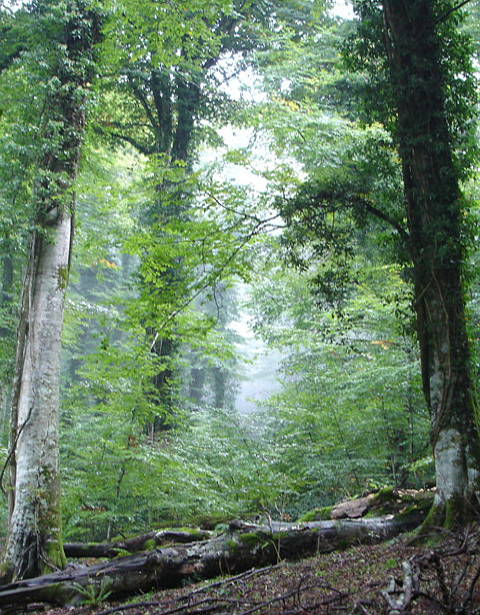
Beech forest, Gargano National Park, Italy (Daniel Vallauri, WWF France)Beech forest, Gargano National Park, Italy (Daniel Vallauri, WWF France)

Rising timber demand, fragmentation from new transport routes and general development pose threats which are intensifying as the recession ends. Yet all too often these are tackled piecemeal by conservationists at local level where it is difficult to muster support. Above all, there is insufficient awareness of the value of this habitat.

Wild Europe has assembled a strategy to address these issues. It covers five key areas: policy framework, protective action, management practice, long-term opportunities and funding.

The strategy is currently in its consultation phase. Feedback from forest specialists in 12 countries has so far been highly positive. We are currently seeking national champions to implement the strategy in their country. Already IUCN together with WWF are doing this in France.

Please give us your feedback on the strategy:

  • Are there aspects that should be added?
  • Do you know areas that are under threat?
  • Would you or your organization be able to help with implementation?

All communications please in the first instance to tobyaykroyd@wildeurope.org.


Options for building a strategy for old growth forest protection in Europe

Introduction

The purpose of this document is to catalyse development of a strategy for protection of remaining old growth forest areas in Europe.

A significant, if as yet undetermined, proportion of this most vulnerable and precious element of Europe’s natural heritage lacks adequate protection – both within and outside the European Union. It is central to the wilderness and wild area agenda.

Recent moves to redesignate and develop core parts of Sumava National Park have shown how rapidly even the most seemingly secure areas can fall under threat. At the same time, wider challenges are occurring across Europe: with rising timber prices and usage, impact of land restitution, fragmentation from new transport routes and pressure for measures to combat bark beetle as climate change takes hold.

Against this backdrop, there is a need to secure effective strategy for protection of remaining areas of old growth forest. Strong threats are often still being addressed piecemeal, and there is a lack of general awareness of the value of this resource and alternative means of ensuring it is preserved for posterity.

However, wilderness forest is, for the first time, recognized in the 2010 EU Biodiversity Strategy (Target 3B Action 12) and this can provide a useful basis for improved support along with a number of emerging initiatives and opportunities.

Focus should be placed on seeking consensus between conservation, landholding, forestry, local community and broader public interests.

Feedback requested on this document

The following summary suggestions are intended to establish an initial framework of reference.

They form a menu of options, and interested parties are invited to provide comments, amendments and additions for development of a working strategy.

Possible key elements of the Strategy

  1. Preparatory work: what, where and how
    1. Establish an Old Growth Forest Protection Forum, comprising representatives from key organizations in conservation, forestry, landholding and other sectors – a mainly online entity enabling collation of expert advice and development of a joint approach on specific actions
    2. Secure agreement on a practical definition of undisturbed, old growth (ancient), wilderness forest with uninterrupted habitat tradition, encompassing its interface with other habitat types (see ACT Report on Undisturbed Forests for EC, 2010) and the new EC validated definition of wilderness (produced by Wild Europe 11/2012)1
    3. Catalyze completion of a comprehensive map of old growth forest across Europe showing location and protective status. Identify priority areas with incomplete protection
    4. Use appropriate implementation of EC Guidelines on non intervention management in wilderness and wild areas for the Natura 2000 network, published in August 20132 and EC Wilderness Register3 (scheduled from Autumn 2013), along with HNV and other appropriate mapping and cataloguing initiatives, to underpin this mapping exercise
    5. Identify, wherever possible in quantifiable terms, the non-extractive multiple benefit values of old growth forest: including ecotourism4 , education – and ecosystem services5
  2. Promoting a policy framework – the EC and beyond
    1. Promote implementation where relevant of the EU Biodiversity Strategy, viz Target 3B Action 12 – which calls for Member States to ensure that forest management plans or equivalent instruments include preservation of wilderness areas. This should involve proactive assessment of plans at relevant MS level (national, local authority). Catalyse identification, promotion and implementation of next steps towards full protection
    2. Link to key elements of European Forest Strategy, Natura 2000 species categories, UNESCO World Heritage, regional initiatives (2011 Carpathia Convention; the European beech OGF inventory initiative) and individual country opportunity so far as feasible – eg Germany wilderness & forest targets, Romania (WWF initiative), UK forestry review
    3. Promote the non-extractive multiple benefit value of old growth forest to the European Commission’s DG Environment: Natura 2000 and the EC Green Infrastructure Programme – biodiversity, ecosystem and socio-economic services
    4. Link to relevant DGs: DG Environment, DG Clima, DG Reggio, DG Agriculture and Rural Affairs (Wild Europe CAP reform proposals), DG Science & Innovation, DG Social & Employment Affairs (social benefits) etc
    5. Incorporate calls for OGF protection into EU Parliamentary Questions and Resolution. These follow the successful Resolution in February 2009 passed by 538 votes to 19 which also endorsed the Wild Europe initiative
    6. Promote the non-extractive multiple benefit value of old growth forest to key forest, landholding, local community and other institutions
    7. Ensure old growth forest is well profiled in promotion and implementation of the new EC guidance on Non Intervention Management in the Natura 2000 Network. Identify key opportunity sites (Section I above), promote direct and indirect benefits for biodiversity.
    8. Correlate with input of key areas to the first edition of the EC Wilderness Register currently under development, and promote infill of the remainder with maximum speed – with linkage where relevant to appropriate individual protection plans.
    9. Assess potential for leverage in non EU states: Neighbourhood Agreements, transition arrangements, trade and aid agreements, exchange of best practice, linkage with local NGOs etc to determine strategy
  3. Protective action
    1. Support creation of an Early Warning System, for identifying and addressing new threats as soon as they emerge, before resource is invested by loggers or developers in influencing planners and decision takers. Promotion of support & capacity building for local campaign groups.
    2. Build support for appropriate collective lobbying where old growth forest and its wilderness principles are under threat – viz Sumava National Park6 , Romanian OGF petition – and link to decision taker targeting and multi media campaigns. Disseminate best practice here.
    3. Catalyze opportunities for development of appropriate protection plans linked to individual areas identified in the future Wilderness Register but not yet adequately covered, based on multi-sector consensus approach underpinned by incentives where feasible.
    4. Legal protection – no new legislation is feasible presently at EC level, but promote better implementation and enforcement of existing law, collate and disseminate information on best practice legislation at MS and local authority levels. Identify weaknesses in existing protective legislation. Link to current initiative assessing wilderness legislation at Tilburg University7 , including assessment of effectiveness of existing Natura 2000 legislation for protecting identified wilderness areas, particularly where highlighted by implementation of new EC guidance (also assess possibility for including new species/habitats).
    5. Ensure existing legal instruments are supported by appropriate research – including collection of investigative information as necessary to achieve practical results: support for full disclosure of timber sourcing in corporate accounts, liaising with investigations of timber industry where appropriate. Ensure protective coverage in HCVF and FSC and other systems.
    6. Identify existing incentives for protection – eg: subsidy best practice at EU, national and local level. Identify requirement for further incentives for OGF protection and restoration.
    7. Collate information on models for securing funds for landholders and communities for forest protection (avoided deforestation) and restoration from ecosystem services: carbon sequestration, flood mitigation, pollution alleviation. Identify in particular EC measures that could help facilitate payment for ecosystem services (PES).
    8. Develop a practical project to illustrate the value of OGF to private landowners (PES, tourism etc), identifying what further incentives may be required (consultant and format identified)
    9. Assess impact on OGF of renewable energy, including biomass, wind farms, HEP. Role of perverse subsidies.
  4. Management practice
    1. Ensure old growth forest is well profiled in promotion and implementation of the new EC guidance on Non Intervention Management in the Natura 2000 Network at field level. Identify key opportunities for enhanced protection, promote direct and indirect benefits for biodiversity.
    2. Promote a strategy to address the impact of climate change – bark beetle, fire and wind throw – in tandem with the forestry sector (institutions, government agencies and private landholders) and other interested parties.
    3. Promote effective approach at EC and national level to disease management generally where relevant – viz: ash dieback, sudden oak death, alder canker
    4. Promote best practice in management planning– eg the TENT project with BSPB in Bulgaria for District Authorities8 .
    5. Profile forest agencies that change structure from 100% timber production and develop protection strategies as model organizations: Coillte (Republic of Ireland)9 , Staatsbosbeheer (Netherlands)
    6. Ensure linkage to protective coverage by FSC and other certification systems.
  5. New opportunities for long-term protection, linkage and restoration
    1. Highlight examples of new wilderness forests creation: through protection and restoration of existing near natural forest (CCF Romania, Durrenstein Austria10); natural or assisted regeneration on marginal farmland – with reference to Target 2 of EU biodiversity Strategy in tandem with CBD GBO Report (2010).
    2. Catalyze restoration, expansion and linkage of old growth forest areas. Promote individual projects – eg Bialowieza Poland/Belarus.
    3. Assess and promote alternatives for landholding in perpetuity – land purchase: eg the Danish model for purchase, input of restrictive covenant and resale of key areas; opportunities for REDD+ support or purchase of boreal forest.
    4. Promote concept for land purchase fund11, identifying multiple sources
    5. Assess and promote model projects for forest protection and restoration in N2000 network: takeover of N2000 area management, identifying wilderness areas with zonation system, inputting benefit based incentive systems and securing lasting protection through National Park designation.
    6. Assist and catalyze development of national wilderness strategies12
    7. Implement ‘business support packages’ (see Wild Europe proposals for Green Infrastructure programme and CAP reform13)
  6. Funding and implementation of plan
    1. Canvass the ability of Wild Europe partners and other organizations to implement elements from the above strategy
    2. Assess opportunities for funding support: EC DGs, LIFE+, institutions, philanthropy, individual project partners
    3. Secure finance for a small secretariat: 1 FT coordinator within the Wild Europe structure, supported by Wild Europe promotion and administration
    4. Develop an EC backed conference for 201414 to publicly launch and promote the OGF Protection Programme (see separate document)
    5. Assess opportunity for developing a communications strategy – website based initially – encouraging a culture of old growth forest awareness in a wilderness/wild context: targeting key programmes such as N2000 and sharing information on best practice initiatives at national and local level.

Suggested objectives for the Strategy

Short-term (18 months)

  • All key OGF areas recorded and recognized
  • Natura 2000 management recognizes and plans for ‘OGF’ forest protection within its network
  • Improved protection promoted for key OGF areas external to N2000 network
  • Greater awareness of OGF benefits and threats among key interests
  • ‘OGF’ protection included in EU Parliament Resolution
  • Credible policy leverage programme in place for non EU OG forests
  • Effective Early Warning System in place for addressing key threats
  • Stronger populist political mandate for OGF protection (Europarliament etc)

Medium term (3-5 years)

  • Key OGF areas recognized and protected
  • Facilitation of funding opportunities from low impact, non-extractive benefits of OGF
  • Credible incentivized protection initiatives in place for private sector
  • Designation of new protected OGF areas, with restoration and connectivity
  • Next stage of EU Biodiversity Strategy OGF support (implementation of Target 3B, Action 12) under way
  • Network for land purchase fund established
  • Opportunity considered for targeted protection legislation, if needed

Contact: This email address is being protected from spambots. You need JavaScript enabled to view it.
+ 44 7793 551 542


[1] Document available on request

[2] Promoted by Wild Europe http://ec.europa.eu/environment/nature/natura2000/wilderness/index_en.htm

[3] Initial proposal prepared and lobbied by Wild Europe, to provide a base-point for protection planning

[4] New market led approaches are being developed to allow more effective value added to local communities

[5] Model initiatives being trialed using carbon credits to fund protection and restoration –for forest habitat (hence the proposal to FCC in Frankfurt July 2013) and peatlands (foundation of PPL Ltd by European Nature Fund)

[6] Further information on the Wild Europe coordinated petition and current situation is available on request

[7] Currently led by Kees Bastmeijer

[8] A model project promoting recognition and protection of wilderness forest in the planning process. Further information available from the European Nature Trust.

[9] Collaborative project between Irish Forest Agency and BallycroyNational Park to create 11,000 hectares declared as forest and wetland wilderness in County Mayo, North WestIreland, personally supported by Irish PM while EU President, and launched at conference co-chaired by Wild Europe in May 2013.

[10] Where the wilderness, non-intervention area was protected through a one-off LIFE+ payment, and more recently extended through annual funding from national sources

[12] For example, Wild Europe is currently liaising closely with IUCN France on development of a national strategy for wilderness, including forests

[13] CAP reform proposals from Wild Europe developed during Danish EC Presidency – document available on request

[14] Modeled on Wild Europe’s EC Presidency conferences on wilderness in Prague (2009) and Brussels (2010)

Natural Ecological Processes

  • Abiotic processes
    • Wind (transport of soil, blowing down trees: making open spots in the forest and holes and heaps for varied micro habitats)
    • Water: streams, waves, flooding, ice, snow – including hydrological impact, flood mitigation, water table maintenance
    • Fire
    • Avalanches
    • Geology: minerals and salt impact – including soil and water composition + richness
    • Climate
  • Biotic processes
    • Wildlife
      • Herbivores (large and small)
        • As food for carnivores, carrion eaters/scavengers, dung eaters etc.
        • Seasonal/diurnal migration & population dynamics
        • For natural management
          • Grazing & browsing
          • Tree bark stripping
          • Manuring
          • Dam building, wetland creating (beaver)
          • Burrowing (rabbits), rooting (wild boar)
          • Seeding (squirrel, jay)
          • Cleansing (filtration from sedges, dam oxygenation)
      • Carnivores
        • Prey-predator relationship: equilibrium densities for a balanced ecosystem
        • Managers of healthy prey populations
        • Indirect impact on vegetation and processes (via effect on prey)
      • Scavangers (large and small)
      • Disease – vectors including bark beetle, moth, fungus
      • Genetic selection and evolution, diversity
      • Reproduction, migration internally and repopulation of external areas
      • Adaptation, resilience (eg in response to climate change, alien species impact)
    • Habitats/flora
      • Natural succession to climax vegetation
      • Habitat mosaics determined by natural dynamics
      • Healthy and diverse ecotone functioning
      • Food source provision
      • Shelter, bedding, medicinal use
      • Genetic selection and evolution, diversity
      • Reproduction, spread internally and repopulation of external areas
      • Adaptation, resilience (eg in response to climate change, alien species impact)
      • Large trees needing a long development period to fulfill ecological potential
    • Natural cycles
      • Sequestration, storage, emission of carbon dioxide, nitrous oxide, methane
      • Carbon – availability of dead biomass (trees, reeds, grasses) as base for microbiotic activity and invertebrates in the foodchain
      • Nitrogen
      • Other elements

Key principles and indicators for proper functioning of natural processes:

  • Scale – large enough to permit as full a range of processes as possible to function
    • Abiotic: room for the water, fire and wind processes
    • Biotic: especially on the level of meta-populations: “key (steering) species”, facilitating viable gene pools, enabling migration and adaptation
  • Self-contained so far as possible – including water sources, habitat ranges
  • Influence from external influences (pollution, alien species, human impact) minimal
  • Highest species variability and broadest age structure within species that can be permitted by local geography

Utilising the benefits

There is substantial opportunity to assess and disseminate best practice for translating the benefits from wild areas into specific light impact ventures – the aim being to maximize their worth for local communities, landholders and other relevant parties.

Careful attention should be paid to ensure an appropriate balance between benefit-related activities and the need for strict maintenance of ‘wild’ principles and negligible disturbance for wildlife.

Only those activities with negligible environmental impact would be suitable in core wild areas, whilst a broader range of undertakings could apply to land undergoing substantial restoration.

Activities relevant to wild areas:

  • Nature tourism
  • Combined packages (agri-tourism, culture, history)
  • Recreational, general sporting
  • Specialist sporting
  • Corporate events, training, incentives and relationship building
  • Healthcare, physiology, eco/psycholog
  • Youth development
  • Youth at risk
  • Reconciliation and conflict mitigation
  • Education (child, adult), research

Economic benefits from these activities:

  • Direct income and employment
  • Branding and logo opportunities for specific goods and services produced in the wild areas – eg ‘wilderness experiences’ – or its vicinity – eg ‘wild’ meat, dairy products, honey; in the latter case, experience suggests the product also needs a distinguishing intrinsic quality such as being organically produced
  • The ‘umbrella effect’ whereby the existence of a wild area can strengthen the marketing appeal of unrelated tourism venues nearby
  • Ancillary services – accommodation, catering, transport, retail and handicraft

Capacity building for local communities and landholders

  • Opportunity to benefit from wild areas can be limited by lack of existing facilities, and here appropriate capacity building is important.
  • Appropriate support can help grow local businesses
  • Identifying and quantifying specific opportunities
  • Improving the quality and capacity of local provision – eg bed and breakfast, small hotels and hostels, retail merchandising
  • Appropriate advice on business planning, management, marketing, employment
  • Ensuring appropriate systems are in place – eg counseling, accreditation, collective marketing, funding, training
  • Advising on best practice in start up or development of specific initiatives or ventures: whether private sector, community, NGO or local authority

Utilising ecosystem services

The above approach mainly applies to utilization of economic and social benefits.

It is also feasible to collate best practice in identification and usage of ecosystem services – eg

  • Linking carbon markets to landowner ecosystem services – ensuring appropriate compensation for existing landholders, or sufficient funding for buy-outs of land where restoration of natural habitat (woodland or marshland) has an appreciable impact on carbon sequestration.
  • Engaging utility & insurance funding in flood mitigation, through quantifying the impact that upstream watershed or lowland sink habitat and process restoration or protection can produce by slowing and diminishing the volume and variance in discharge and thus enabling downstream savings in flood insurance, capital expenditure on flood defences.
  • Similarly, through pollution mitigation effects reducing downstream water treatment costs.

Development of markets for social benefits

As social benefits from wild areas become more widely appreciated, and increasingly underwritten by scientifically based studies, it is also increasingly feasible to develop wider ‘markets’ especially for newer activities such as youth at risk or healthcare.

Two examples here are:

  • Probationary services. Cost savings from lower reoffending rates or non-custodial treatment can be used to promote youth at risk ventures to decision takers in Home Office ministries and probation services who allocate funding and determine budgets.
  • National health services. Similar opportunities exist for quantified promotion of benefits of wild areas for treatment of psychological conditions, including general health & well-being, stress, trauma.

In both cases promotion plans are needed, developed by conservation agencies or NGOs in tandem with the relevant social service providers.

Illegal road threat to Romanian National Park

Construction of the illegal 66A road has reached the core area of Domogled National Park in the Carpathians threatening a key area of old growth forest, designated as an Intact Forest Landscape.

A road to nowhere? Protesters against illegal constructionA road to nowhere? Protesters against illegal construction

Approval by the Romanian National Environmental Protection Agency has not been granted due to the reported deficiencies in the environmental impact assessment, including lack of review of the impact of the road itself.

Representatives from local organizations organized a protest camp at the construction site this summer and there is a growing movement against the road, with thousands signing an online petition and liaising through Facebook.

The second section of the road, from Campu lui Neag to Campusel in Hunedoara county, has already been built – without approval of the Environment Protection Agency or the Retezat National Park administration.

It is the third phase, also illegal, which now threatens the core area of Domogled’s ancient forests.

Protesters regard this issue as symptomatic of a wider disregard for safeguarding supposedly protected areas, particularly such a key example of wilderness heritage with its rich biodiversity.  On this latter point alone, the Environmental Impact Assessment for the road construction appears to significantly under-report the range of species present.

Local NGOs commissioned a biodiversity counter-study and asked the National Environment Protection Agency not to approve the project.

„The preliminary results of the counter-study already show that the biodiversity here is much higher than stated in the beneficiary’s study”, said Luminiţa Tănasie, WWF Programme Director in Romania. “For example, until now we have registered 109 distinct points where large and medium mammals cross the road. The assessment commissioned by the beneficiary discovered only one bear trace. We found 26 bat species, whereas the beneficiary said that there are no bats in the area. We found 34 breeding places for reptiles and amphibians, as opposed to only two in the beneficiary’s assessment. The differences are significant and they cannot be ignored by the National Environment Protection Agency”.

”But above all to us this road is symbolic of the disregard for protected areas in Romania. The European Commission has already instigated several penalty procedures against the country for not complying with the law when it comes to nature protection”, Tănasie added.

For further information, see this WWF article (external link): Romanian authorities ignore NGO invitation to discuss the 66A road

Malgorzata Gorska, Poland

Malgorzata Gorska winner of Goldman Prize for saving Rospuda Valley

Malgorzata GorskaMalgorzata Gorska

When plans were drafted in 1996 for a motorway linking Warsaw with Helsinki, the so-called ‘Via Baltica’, the proposed route threatened the wild Rospuda River Valley in North Eastern Poland.

With its extensive network of peat bogs and undisturbed forests, Rospuda is home to a rich biodiversity of species including wolf, bear, lynx, beaver, eagle and orchids.

Notwithstanding its classification as a Natura 2000 site, the route would not only devastate Rospuda, but also despoil three other key Natura sites: Augustow and Knyszyn Primeval Forests along with the internationally acclaimed Biebrza Marshes.

Malgorzata Gorska, an activist with the Polish Society for Protection of Birds, set to work collecting data to develop a case against the motorway route, forming a coalition of conservation NGOs, organizing legal representation and galvanizing public support.

When this failed to halt the motorway plans, she took her case to the Petitions Committee of the European Parliament, arranging a visit for MEPs and scientific advisors to the Rospuda Valley and convincing them of the need to change the route.

The European Court of Justice subsequently called for a halt to further construction under European law, whilst back in Poland the courts found the route to be in violation of national law.

In March 2009 the Polish government to its credit agreed to a change of route, preserving all four sites.

A landmark victory for wild areas

This decision not only represents a landmark in Polish environmental history – virtually the first time protection of a wild area has taken precedence over an important economic objective – but also provides an invaluable model for other groups across Europe on how planning, orchestration of collective support and careful targeting of pressure it is possible to win sensible compromise against even the most powerful vested interests.

Protection measures announced for Carpathian forest in 2011

Primeval beech forests of UkrainePrimeval beech forests of Ukraine

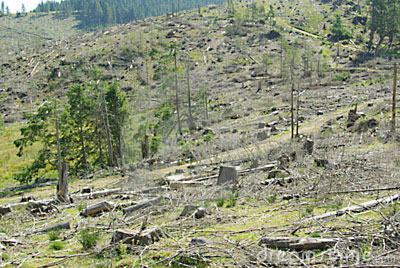
The threat of logging is still widespreadThe threat of logging is still widespread

Old growth forest should receive greater protection following signature of a Protocol on ‘sustainable forest management’ by ministers from the 7 Carpathian Convention countries: the Czech Republic, Hungary, Poland, Romania, Serbia, Slovakia and Ukraine

Clarification of how the Protocol will be implemented on the ground is still needed, but it does specify identification and protection of virgin forests.

This initiative comes at a time when old growth forest wilderness has, for the first time, been specifically cited in the EU Biodiversity Strategy. It also follows recent legislation on illegal logging – and coincides with the Wilderness Register which started being being developed for the EC during 2012.

Areas to be covered

Roughly 300,000 hectares of old growth forest still remain across the Carpathian mountains, generally in less accessible areas.

Much of this is still under threat of logging – both legal and illegal – particularly in Romania where only 18% of the estimated 250,000 hectares of virgin forest are in protected areas; with state held land being restituted to its former owners, the problem has accelerated in recent years – large scale felling has occurred even in national parks.

The first task involves identification of genuine old growth forest, replacing the looser terminology that applies the ‘virgin’ label across many conditions and age categories. An assessment conducted in 2009 in Slovakia for example found only 0.47% of forests were truly old growth as against 2% previously estimated. Similarly, a survey of a Biosphere Reserve in Bulgaria on the border with Greece, found that forest previously categorised as old growth was in fact substantially managed.

The Protocol is also aimed at over 10,000 hectares of beech forests in Eastern Slovakia and Ukraine

Opportunities for restoration

In addition to protection of forest, a key objective of the Protocol is also to promote substantial restoration – both enlarging this habitat and reinstating the full integrity of its natural processes: improving ecosystem services such as flood mitigation, general water cycle operation and carbon sequestration, and prevention of soil erosion and landslips.

This can be linked to a key goal of the EU Biodiversity Strategy – restoration of 15% of degraded habitat by 2020.

500,000 Euro raised for old growth forest protection

Wild Europe hands 320,000 EUR to FZS for old growth forest program

We are happy to announce a significant funding success for European old growth forest conservation following Wild Europe’s September 2017 conference in Brussels. 

Some 500,000 Euro has since been raised, through participants at the conference, for various projects.

Within this total, a grant of over 320,000 Euro has been awarded for a mapping, ecosystem service and protection project involving a multi-country approach with particular focus on key areas in Central & Eastern European. It will also enable work on policy impact, benefits of non-extractive enterprise for local communities, exchange of best practice and new funding models.

Wild Europe submitted an initial project proposal to the organisers, based at Griffith University, Australia, in November. We then handed this over to the Frankfurt Zoological Society (see footnote), one of our key partners who provided an application that built on the Wild Europe version and adapted it to their specialist capacity and fieldwork.

Close links to the OGF Protection Strategy for Europe

The program to be undertaken by FZS will be closely linked with the wider Old Growth Forest Protection Strategy produced by Wild Europe. 

This is part of a wider international initiative to support primary forests – highlighting threats to their existence and raising their profile as major providers of ecosystem services. A separate grant in excess of 300,000 Euro, within the same initiative, is being awarded for work on old growth forest in Russia. 

Footnote:  Wild Europe’s current constitution precludes the holding of contracts, in line with our key operating principle agreed with our partners, to support rather than compete with them. 

Old growth forest conference (Brussels 2017) launches key protection proposals

The Wild Europe conference on 13/14th September 2017 to develop a Protection Strategy for remaining old growth forest in Europe has been hailed as a significant success by those attending.

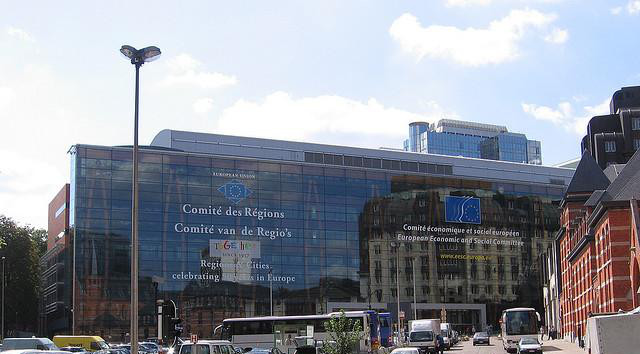
Kindly hosted by the European Committee of the Regions in Brussels, this had 149 registrations and attendance from 28 EU and non EU countries.

The conference included representatives from the European Commission, UNESCO, Council of Europe, national and local governments. A key theme of the programme was the need for a multi-sector approach to developing the Protection Strategy. Participation by a balance of foresters, state agencies, enterprise specialists and landowners as well as conservation NGOs proved of considerable help in identifying common ground to underwrite the Strategy.

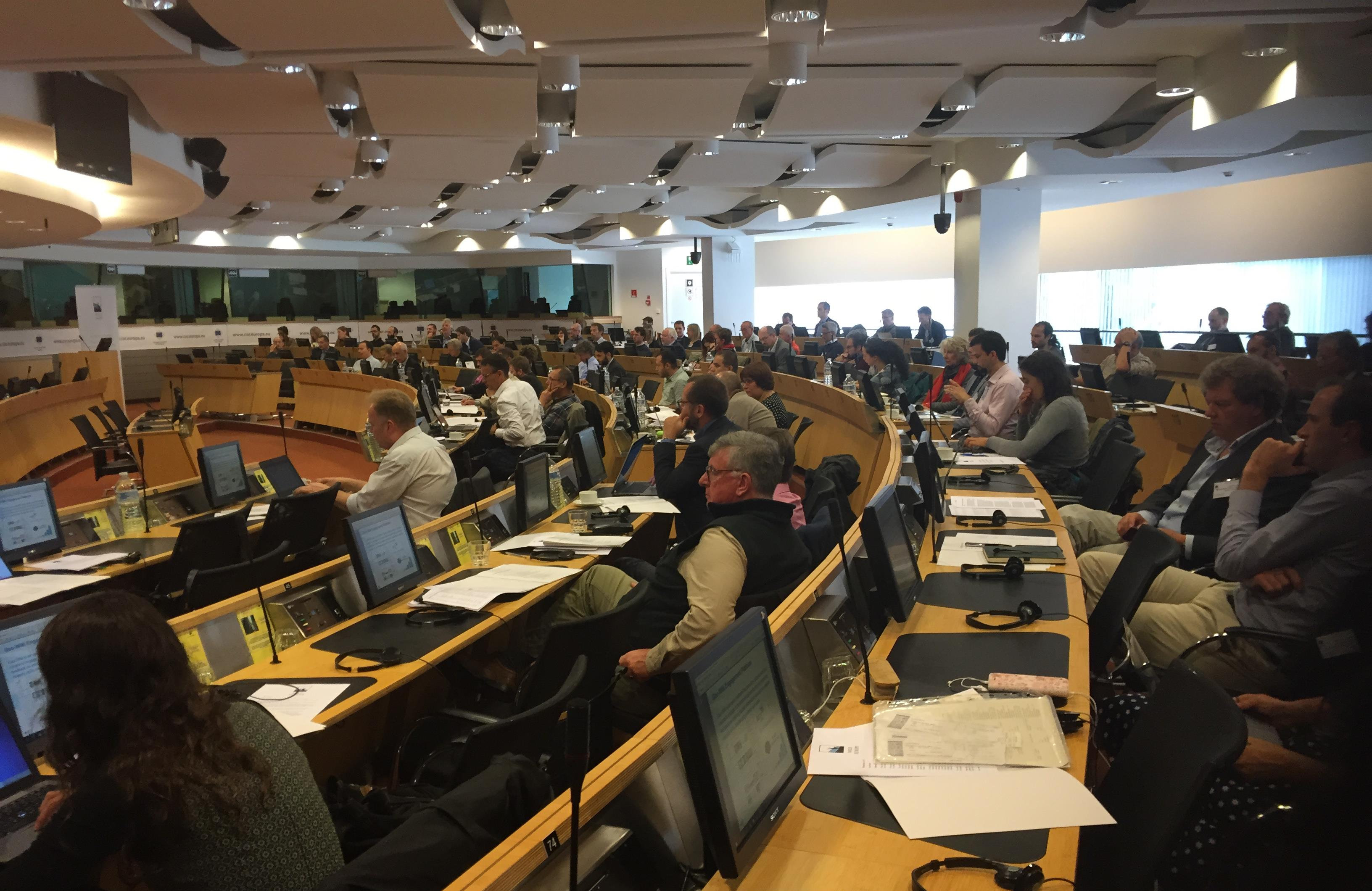
Conference participants in the opening session

A welcome was provided by the Director General of DG Environment at the European Commission, Daniel Calleja. Speaking by video (he was in Beijing), he declared “Old growth forests are icons of Europe’s natural heritage… We are committed to protecting and restoring them”.

See VIDEO of Daniel Calleja

The conference was opened by Humberto Delgado, Head of Natural Capital for the European Commission, who stressed the multiple benefits of the forests, in particular their importance to the ecosystem services agenda (biodiversity, nature tourism, carbon, hydrology) – with much greater levels of ongoing carbon capture for mitigating climate change than was often appreciated.

Isabelle Anatole-Gabriel, Chief of the Europe and North America Department for UNESCO World Heritage, welcomed the conference and strategy. She underlined the importance of old growth forest benefits for local communities as well as biodiversity, and pointed to the potential for securing them through stronger links between Natura 2000 and World Heritage networks.

See VIDEO of Isabelle Anatole-Gabriel

Key elements of protection strategy launched

In addition to its declared aim of raising the profile of old growth forest with policy makers, the conference introduced a range of practical proposals, including:

  • A Europe wide definition structure providing a standardized approach to identifying virgin, primary and old growth forest (OGF) – vital for effective protection and restoration
  • An interactive mapping instrument to locate and monitor old growth forest sites across Europe
  • An ‘early alert system’ designed to provide early notice of prospective threats
  • Assessment of new forms of long-term protection structure
  • Funding sources: traditional and innovative, including proposals for improving cash flow opportunities from the Payment for Ecosystem Services agenda
  • Proposals for set-aside of state agency forest
  • Focus, for the first time, on potential for coordination between UNESCO World Heritage and Natura 2000 networks, as cited by Isabelle Anatole-Gabriel. Implementation of the protection strategy is proposed as an initial trial

The resulting Protection Strategy will be informed by specialist reports, also introduced at the conference: by Conservation Capital on Incentives for Landholder Protection of Old Growth Forests in the non-state (private) sector, and the ClientEarth lawyer network on Legal and Policy Aspects of Protection.

Consultation for a consensus approach

The conference was held at the EU Committee of the Regions, reflecting the importance of support at regional and local level

The location of the conference was highly relevant to the proceedings. As pointed out by Roby Biwer, speaking as a Council Member for the Committee of the Regions at the very start of the conference, the success of the Protection Strategy will be determined substantially by actions at local level.

The conference itself is rooted in three years of consultation involving many inspirational protection initiatives already established across Europe. This resulted in production of a guidance document “Old Growth Forest Protection Strategy” (PDF).

A full account of the conference, together with further information on the protection strategy with a proposed action plan, will follow shortly.

See conference programme

Biography of speakers, session chairs and workshop coordinators

Many thanks are due to the Committee of the Regions and all our sponsors for their generous support of this event.

‘Re-wilding’ – a wind of change gathers strength in Western Europe

Whilst wilderness is mainly associated with Northern and Eastern Europe, where the prime objective is protection of remaining great areas of natural ecology, this is increasingly complemented by re-wilding of habitats and reintroduction of species in Western Europe.

A growing number of countries are now adopting national strategies for restoration of large-scale natural ecosystems, amid increased awareness of their benefit to conservation objectives and society in general.

Kalkalpen National Park in Austria – a wilderness core (Credit: "Hintergebirge 01" by Herbert Ortner, Überraschungsbilder - Self-published work by Herbert Ortner, transferred by Überraschungsbilder. Licensed under CC BY 3.0 via Wikimedia Commons)Kalkalpen National Park in Austria – a wilderness core (Credit: “Hintergebirge 01” by Herbert Ortner, Überraschungsbilder – Self-published work by Herbert Ortner, transferred by Überraschungsbilder. Licensed under CC BY 3.0 via Wikimedia Commons)

Austria has led the fray. In December 2014 it set a 2% target in its 2020+ National Biodiversity Strategy for wilderness and areas with wilderness characteristics. This also called for the extension of wilderness areas in National Parks.

The Wild Europe definition forms the basis for wilderness in the Austrian strategy for National Parks, two of which will have core areas designated to Wild Europe criteria in 2015/16.

Furthermore development of a management strategy for bark beetle based on an all-important consensus between conservation and forestry interests, provides important support – of relevance across Europe.

France is also moving ahead. A specialist group has been formed within IUCN (from 2012) to assess potential for a wilderness strategy. Also based around the Wild Europe definition, this brings together a range of experts. Wild Europe is a member of the group and has provided input to meetings in Paris, a conference in Chambercy and via media such as the Naturalité publication. Prospective opportunities are currently being identified through preliminary mapping.

More recently, but gaining momentum rapidly, Rewilding Britain was established in December 2014 from a coalition of NGOs, with Wild Europe as a trustee. Scotland has greatest geographic potential, with Wild Europe (as Wild Scotland) originally developing a joint study on the benefits of wild areas in 2005.

In Wales Wild Europe is also partnering a project to reintroduce beaver , a keystone species for rewilding, into one of only six countries in Europe where this has yet to occur.

There is even substantial scope for rewilding in England, with initiatives such as Wild Ennerdale in the Lake District and the Great Fen in East Anglia. A strategy for Northern Ireland is pending once the main Rewilding Britain group has become established.

Germany has set a 2% national target, for wilderness and wild areas with wilderness qualities, through its Federal government. This represents some 5% of forest areas and 10% of those in state ownership.

Restoration of former military training areas, BrandenburgRestoration of former military training areas, Brandenburg

In April 2015 Frankfurt Zoological Society co-facilitated a meeting with Wild Europe to discuss opportunity for underpinning this through adoption of a standardized approach and common definition.

A growing number of individual projects

These emerging national strategies are supplemented by a growing number of individual projects, their implementation backed by Guidelines on wilderness management issued by the European Commission in 2013 and based on the Wild Europe’s definition.

The Netherlands contains perhaps the best known longstanding restoration initiative in the pioneering Oostvaardersplassen area, managed by Statsbosbeheer, the state forest agency.

This stunning example of wild nature on land originally reclaimed for industrial development that hosts white-tailed sea eagle, spoonbill and free roaming herds of feral ungulates, is only 30 km from Amsterdam city centre. It is hoped that plans to double the area, extending it Eastwards in partnership with the Province of Flevoland for the mutual benefit of urban dwellers and wild nature, will be revived. This forms part of a Green Network that is eventually envisaged to cover 17% of the country, although progress is currently stalled.

Equally well-established are ventures such as wolf-focused tourism in Abruzzi National Park, Italy, proving how economic benefits from rewilding can offer better livelihoods for communities than traditional land use, in this case sheep farming.

Abruzzo National Park - transforming economic as well as physical landscapes (Credit: "PNAbruzzo2" by Lucius - Transferred from it:wikipedia. Licensed under CC BY-SA 3.0 via Wikimedia Commons)Abruzzo National Park – transforming economic as well as physical landscapes (Credit: “PNAbruzzo2” by Lucius – Transferred from it:wikipedia. Licensed under CC BY-SA 3.0 via Wikimedia Commons)

Highly significant though less well known, in the Irish Republic there is ongoing progress with restoration of natural processes and species in the Nephin Mountains, County Mayo, where former commercial forestry plantations have been linked with adjoining bog and grassland in Ballcroy National Park. This visionary venture so far involving some 12,000 hectares was conceived and developed by Coillte, the Irish state forest agency, in tandem with Ballycroy, in 2012 and promoted internationally at a conference co-chaired by Wild Europe in 2013. It is partnered by the local authority and regional development organizations, and will see uneconomic timber extraction replaced by wilderness tourism.

There is important potential here for application across Europe, particularly relevant to loss-making areas owned by state forest agencies. At a time of slow economic recovery, the venture offers triple benefits: savings to taxpayers, sounder livelihoods for local communities – and enriched biodiversity through restoration of natural processes and reintroduction of lost species to large areas of ‘rewilded’ former commercial forest.

Wild Europe is developing an international State Agency Forest programme, based around this opportunity, which will be profiled in 2016.

Of course, restoration projects are by no means merely confined to countries in Western Europe. In Romania, Fundatia Conservation Carpathia (FCC) where Wild Europe participates through a trustee, is undertaking extensive restoration of degraded former forest and riparian habitat.

Repairing the damage: large-scale felling erodes hillsides and silts up streams in the Carpathians of Romania (Photo credit: FCC)Repairing the damage: large-scale felling erodes hillsides and silts up streams in the Carpathians of Romania (Photo credit: FCC)

There is also a collective endeavour by the Rewilding Europe organization to reintroduce species and establish a network of wilderness-based enterprises as a means of securing income and employment opportunities from non-extractive activity, thus cementing support among local communities and landholders for protection and restoration of wilderness areas.

Right across Europe there are opportunities for enterprise-based rewilding, with abandoned and marginal farmland and forestry offering particular opportunity.

From West to East and back, a powerful message

At a time when benefits of wilderness in addressing climate change, providing sustainable income and employment for local communities is increasingly realized, there is of course a strong message here.

If Western countries are striving to restore large natural ecosystems, for economic and social as well as conservation gain, that should send powerful signals Eastwards to governments and institutions where preservation of much larger, richer areas of wild nature can be undertaken at much lower cost with very significant gains for conservation and society in general.

Wide welcome for Wild Europe’s old growth forest protection strategy

A significant proportion of this most fragile element of Europe’s natural heritage lacks protection.

Beech forest, Gargano National Park, Italy (Daniel Vallauri, WWF France)

Rising timber demand, fragmentation from new transport routes and general development pose threats which are intensifying as the recession ends. Yet all too often these are tackled piecemeal by conservationists at local level where it is difficult to muster support. Above all, there is insufficient awareness of the value of this habitat.

Wild Europe has assembled a strategy to address these issues. It covers five key areas: policy framework, protective action, management practice, long-term opportunities and funding.

The strategy is currently in its consultation phase. Feedback from forest specialists in 12 countries has so far been highly positive. We are currently seeking national champions to implement the strategy in their country. Already IUCN together with WWF are doing this in France.

Please give us your feedback on the strategy:

  • Are there aspects that should be added?
  • Do you know areas that are under threat?
  • Would you or your organization be able to help with implementation?

All communications please in the first instance to tobyaykroyd@wildeurope.org.


Options for building a strategy for old growth forest protection in Europe

Introduction

The purpose of this document is to catalyse development of a strategy for protection of remaining old growth forest areas in Europe.

A significant, if as yet undetermined, proportion of this most vulnerable and precious element of Europe’s natural heritage lacks adequate protection – both within and outside the European Union. It is central to the wilderness and wild area agenda.

Recent moves to redesignate and develop core parts of Sumava National Park have shown how rapidly even the most seemingly secure areas can fall under threat. At the same time, wider challenges are occurring across Europe: with rising timber prices and usage, impact of land restitution, fragmentation from new transport routes and pressure for measures to combat bark beetle as climate change takes hold.

Against this backdrop, there is a need to secure effective strategy for protection of remaining areas of old growth forest. Strong threats are often still being addressed piecemeal, and there is a lack of general awareness of the value of this resource and alternative means of ensuring it is preserved for posterity.

However, wilderness forest is, for the first time, recognized in the 2010 EU Biodiversity Strategy (Target 3B Action 12) and this can provide a useful basis for improved support along with a number of emerging initiatives and opportunities.

Focus should be placed on seeking consensus between conservation, landholding, forestry, local community and broader public interests.

Feedback requested on this document

The following summary suggestions are intended to establish an initial framework of reference.

They form a menu of options, and interested parties are invited to provide comments, amendments and additions for development of a working strategy.

Possible key elements of the Strategy

  1. Preparatory work: what, where and how
    1. Establish an Old Growth Forest Protection Forum, comprising representatives from key organizations in conservation, forestry, landholding and other sectors – a mainly online entity enabling collation of expert advice and development of a joint approach on specific actions
    2. Secure agreement on a practical definition of undisturbed, old growth (ancient), wilderness forest with uninterrupted habitat tradition, encompassing its interface with other habitat types (see ACT Report on Undisturbed Forests for EC, 2010) and the new EC validated definition of wilderness (produced by Wild Europe 11/2012)1
    3. Catalyze completion of a comprehensive map of old growth forest across Europe showing location and protective status. Identify priority areas with incomplete protection
    4. Use appropriate implementation of EC Guidelines on non intervention management in wilderness and wild areas for the Natura 2000 network, published in August 20132 and EC Wilderness Register3 (scheduled from Autumn 2013), along with HNV and other appropriate mapping and cataloguing initiatives, to underpin this mapping exercise
    5. Identify, wherever possible in quantifiable terms, the non-extractive multiple benefit values of old growth forest: including ecotourism4 , education – and ecosystem services5
  2. Promoting a policy framework – the EC and beyond
    1. Promote implementation where relevant of the EU Biodiversity Strategy, viz Target 3B Action 12 – which calls for Member States to ensure that forest management plans or equivalent instruments include preservation of wilderness areas. This should involve proactive assessment of plans at relevant MS level (national, local authority). Catalyse identification, promotion and implementation of next steps towards full protection
    2. Link to key elements of European Forest Strategy, Natura 2000 species categories, UNESCO World Heritage, regional initiatives (2011 Carpathia Convention; the European beech OGF inventory initiative) and individual country opportunity so far as feasible – eg Germany wilderness & forest targets, Romania (WWF initiative), UK forestry review
    3. Promote the non-extractive multiple benefit value of old growth forest to the European Commission’s DG Environment: Natura 2000 and the EC Green Infrastructure Programme – biodiversity, ecosystem and socio-economic services
    4. Link to relevant DGs: DG Environment, DG Clima, DG Reggio, DG Agriculture and Rural Affairs (Wild Europe CAP reform proposals), DG Science & Innovation, DG Social & Employment Affairs (social benefits) etc
    5. Incorporate calls for OGF protection into EU Parliamentary Questions and Resolution. These follow the successful Resolution in February 2009 passed by 538 votes to 19 which also endorsed the Wild Europe initiative
    6. Promote the non-extractive multiple benefit value of old growth forest to key forest, landholding, local community and other institutions
    7. Ensure old growth forest is well profiled in promotion and implementation of the new EC guidance on Non Intervention Management in the Natura 2000 Network. Identify key opportunity sites (Section I above), promote direct and indirect benefits for biodiversity.
    8. Correlate with input of key areas to the first edition of the EC Wilderness Register currently under development, and promote infill of the remainder with maximum speed – with linkage where relevant to appropriate individual protection plans.
    9. Assess potential for leverage in non EU states: Neighbourhood Agreements, transition arrangements, trade and aid agreements, exchange of best practice, linkage with local NGOs etc to determine strategy
  3. Protective action
    1. Support creation of an Early Warning System, for identifying and addressing new threats as soon as they emerge, before resource is invested by loggers or developers in influencing planners and decision takers. Promotion of support & capacity building for local campaign groups.
    2. Build support for appropriate collective lobbying where old growth forest and its wilderness principles are under threat – viz Sumava National Park6 , Romanian OGF petition – and link to decision taker targeting and multi media campaigns. Disseminate best practice here.
    3. Catalyze opportunities for development of appropriate protection plans linked to individual areas identified in the future Wilderness Register but not yet adequately covered, based on multi-sector consensus approach underpinned by incentives where feasible.
    4. Legal protection – no new legislation is feasible presently at EC level, but promote better implementation and enforcement of existing law, collate and disseminate information on best practice legislation at MS and local authority levels. Identify weaknesses in existing protective legislation. Link to current initiative assessing wilderness legislation at Tilburg University7 , including assessment of effectiveness of existing Natura 2000 legislation for protecting identified wilderness areas, particularly where highlighted by implementation of new EC guidance (also assess possibility for including new species/habitats).
    5. Ensure existing legal instruments are supported by appropriate research – including collection of investigative information as necessary to achieve practical results: support for full disclosure of timber sourcing in corporate accounts, liaising with investigations of timber industry where appropriate. Ensure protective coverage in HCVF and FSC and other systems.
    6. Identify existing incentives for protection – eg: subsidy best practice at EU, national and local level. Identify requirement for further incentives for OGF protection and restoration.
    7. Collate information on models for securing funds for landholders and communities for forest protection (avoided deforestation) and restoration from ecosystem services: carbon sequestration, flood mitigation, pollution alleviation. Identify in particular EC measures that could help facilitate payment for ecosystem services (PES).
    8. Develop a practical project to illustrate the value of OGF to private landowners (PES, tourism etc), identifying what further incentives may be required (consultant and format identified)
    9. Assess impact on OGF of renewable energy, including biomass, wind farms, HEP. Role of perverse subsidies.
  4. Management practice
    1. Ensure old growth forest is well profiled in promotion and implementation of the new EC guidance on Non Intervention Management in the Natura 2000 Network at field level. Identify key opportunities for enhanced protection, promote direct and indirect benefits for biodiversity.
    2. Promote a strategy to address the impact of climate change – bark beetle, fire and wind throw – in tandem with the forestry sector (institutions, government agencies and private landholders) and other interested parties.
    3. Promote effective approach at EC and national level to disease management generally where relevant – viz: ash dieback, sudden oak death, alder canker
    4. Promote best practice in management planning– eg the TENT project with BSPB in Bulgaria for District Authorities8 .
    5. Profile forest agencies that change structure from 100% timber production and develop protection strategies as model organizations: Coillte (Republic of Ireland)9 , Staatsbosbeheer (Netherlands)
    6. Ensure linkage to protective coverage by FSC and other certification systems.
  5. New opportunities for long-term protection, linkage and restoration
    1. Highlight examples of new wilderness forests creation: through protection and restoration of existing near natural forest (CCF Romania, Durrenstein Austria10); natural or assisted regeneration on marginal farmland – with reference to Target 2 of EU biodiversity Strategy in tandem with CBD GBO Report (2010).
    2. Catalyze restoration, expansion and linkage of old growth forest areas. Promote individual projects – eg Bialowieza Poland/Belarus.
    3. Assess and promote alternatives for landholding in perpetuity – land purchase: eg the Danish model for purchase, input of restrictive covenant and resale of key areas; opportunities for REDD+ support or purchase of boreal forest.
    4. Promote concept for land purchase fund11, identifying multiple sources
    5. Assess and promote model projects for forest protection and restoration in N2000 network: takeover of N2000 area management, identifying wilderness areas with zonation system, inputting benefit based incentive systems and securing lasting protection through National Park designation.
    6. Assist and catalyze development of national wilderness strategies12
    7. Implement ‘business support packages’ (see Wild Europe proposals for Green Infrastructure programme and CAP reform13)
  6. Funding and implementation of plan
    1. Canvass the ability of Wild Europe partners and other organizations to implement elements from the above strategy
    2. Assess opportunities for funding support: EC DGs, LIFE+, institutions, philanthropy, individual project partners
    3. Secure finance for a small secretariat: 1 FT coordinator within the Wild Europe structure, supported by Wild Europe promotion and administration
    4. Develop an EC backed conference for 201414 to publicly launch and promote the OGF Protection Programme (see separate document)
    5. Assess opportunity for developing a communications strategy – website based initially – encouraging a culture of old growth forest awareness in a wilderness/wild context: targeting key programmes such as N2000 and sharing information on best practice initiatives at national and local level.

Suggested objectives for the Strategy

Short-term (18 months)

  • All key OGF areas recorded and recognized
  • Natura 2000 management recognizes and plans for ‘OGF’ forest protection within its network
  • Improved protection promoted for key OGF areas external to N2000 network
  • Greater awareness of OGF benefits and threats among key interests
  • ‘OGF’ protection included in EU Parliament Resolution
  • Credible policy leverage programme in place for non EU OG forests
  • Effective Early Warning System in place for addressing key threats
  • Stronger populist political mandate for OGF protection (Europarliament etc)

Medium term (3-5 years)

  • Key OGF areas recognized and protected
  • Facilitation of funding opportunities from low impact, non-extractive benefits of OGF
  • Credible incentivized protection initiatives in place for private sector
  • Designation of new protected OGF areas, with restoration and connectivity
  • Next stage of EU Biodiversity Strategy OGF support (implementation of Target 3B, Action 12) under way
  • Network for land purchase fund established
  • Opportunity considered for targeted protection legislation, if needed

Contact: This email address is being protected from spambots. You need JavaScript enabled to view it.
+ 44 7793 551 542


[1] Document available on request

[2] Promoted by Wild Europe http://ec.europa.eu/environment/nature/natura2000/wilderness/index_en.htm

[3] Initial proposal prepared and lobbied by Wild Europe, to provide a base-point for protection planning

[4] New market led approaches are being developed to allow more effective value added to local communities

[5] Model initiatives being trialed using carbon credits to fund protection and restoration –for forest habitat (hence the proposal to FCC in Frankfurt July 2013) and peatlands (foundation of PPL Ltd by European Nature Fund)

[6] Further information on the Wild Europe coordinated petition and current situation is available on request

[7] Currently led by Kees Bastmeijer

[8] A model project promoting recognition and protection of wilderness forest in the planning process. Further information available from the European Nature Trust.

[9] Collaborative project between Irish Forest Agency and BallycroyNational Park to create 11,000 hectares declared as forest and wetland wilderness in County Mayo, North WestIreland, personally supported by Irish PM while EU President, and launched at conference co-chaired by Wild Europe in May 2013.

[10] Where the wilderness, non-intervention area was protected through a one-off LIFE+ payment, and more recently extended through annual funding from national sources

[12] For example, Wild Europe is currently liaising closely with IUCN France on development of a national strategy for wilderness, including forests

[13] CAP reform proposals from Wild Europe developed during Danish EC Presidency – document available on request

[14] Modeled on Wild Europe’s EC Presidency conferences on wilderness in Prague (2009) and Brussels (2010)

Leading scientists dismayed by emerging EU climate policy and its impact on forests

A letter sent on 25th September by 194 leading environmental scientists to the Estonian EC Presidency and key members of the European Parliament expresses ‘concern and dismay’ at the recent vote in the European Parliament on EU climate legislation for forests. This involves the LULUCF (land use, land use change and forestry) Regulation and the sustainability criteria of biomass in the Renewable Energy Directive.

The letter argues against promotion of increased harvest levels to substitute fossil-derived fuels and products with wood and bioenergy without accounting for their full climate impacts.

Such an approach, says the letter, risks having adverse effects on climate, biodiversity and resilient ecosystems by emitting more greenhouse gases and causing additional habitat loss – with particular focus on the fate of old growth forest: already under pressure from rising timber prices and illegal logging.

Accumulating evidence, argue the scientists, suggests that the proposed strategy risks being counterproductive.

This letter is sent in the wake of two reports:

The European Academies Science Advisory Council (EASAC) May 2017 “Multi-functionality and Sustainability in the European Union’s Forests

Royal Institute of International Affairs (RIIA) February 2017 “The Impacts of the Demand for Woody Biomass for Power and Heat on Climate and Forests

How wilderness contributes to the Green Infrastructure programme

The importance of wilderness and wild areas to a fully functioning ecosystem has been consistently promoted by Wild Europe.

Undisturbed ‘wilderness’ habitats have higher carbon storage capacityUndisturbed ‘wilderness’ habitats have higher carbon storage capacity

The EU’s Green Infrastructure programme under the former 2010 Biodiversity Strategy sought to establish priorities for restoration, in particular as related to Target 2 which focused on reinstatement of 15% of degraded ecosystems in Europe by 2020.

This target has been widely missed, and establishing a large scale restoration strategy forms a key objective in the 2020-2030 Biodiversity Strategy.

“There is much the EC can do to enhance the already substantial contribution of wilderness to its Green Infrastructure programme – and it isn’t just about paying the bill. Facilitating new and innovative funding opportunities from ecosystem services and other sources is an equally important role”, said Toby Aykroyd, Wild Europe director.

“The Green Infrastructure programme should also promote a strong protection agenda, focusing for example on inclusion of wilderness – particularly all remaining old growth forest – in forest management plans. It’s far cheaper to keep an existing ecosystem intact than to restore a degraded one.”

The benefits of wilderness and wild areas have a substantial role to play in supporting the objectives of the Green Infrastructure programme.


Benefits for biodiversity

It is widely known that wilderness and wild areas harbour key species that gain most from remoter, less disturbed locations. Such areas provide a crucible for ongoing evolution and a base point for assessing the health of natural processes generally. They support more resilient natural ecosystems and larger gene pools, aiding species adaptation and migration in response to climate change.

Less well recognized are their socio-economic benefits, which can enable restoration, and expansion of existing areas, as well as creation of new areas and connectivity corridors between them.

Ecosystem services addressing climate change

Undisturbed, unmanaged forests and wetlands have significantly higher carbon sequestration capacity than their more managed counterparts. Business-based initiatives by Wild Europe partners to gain carbon funding for conservation from wetland restoration are already proving successful, and the initiative will shortly be extended to forests.
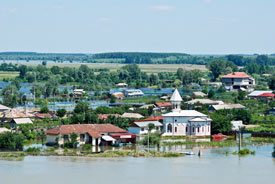
Restoration of large-scale natural habitat areas can mitigate downstream floodingRestoration of large-scale natural habitat areas can mitigate downstream flooding

The same arguments can apply to other ecosystem services, including flood mitigation (through watershed or lowland sink locations), improved water-table retention and pollution alleviation.  Restoration of large natural ecosystem areas in upland watersheds and lowland sinks can help mitigate flooding which currently causes millions of euros of damage to downstream buildings, infrastructure and agricultural production.

The substantial size of these wilderness areas, together with the effectiveness of their natural processes (eg carbon or water storage) enables them to deliver ecosystem service benefits on a significant scale likely to attract a wide and sustainable range of funding from private as well as public sources: including corporations, public utilities, insurance and local authorities not traditionally supportive of conservation. This opportunity applies as much to restoration as to protection projects: for example the overall reduction in carbon dioxide from net emissions from land used for (often marginal) agriculture to net storage by subsequently restored natural habitats can create a considerable impact on climate change – and raise funding in the process.

The EC role here could be as much about facilitating the potential from ecosystem services as providing policy or funding support. For example, to encourage carbon sequestration initiatives, it could:

  • promote a more substantial voluntary PES market, with a compliance market like the ETS (Emissions Trading Scheme) to follow
  • facilitate development of common measurement standards for PES market services, and a validation & monitoring framework – building on entrepreneurial standards already being established
  • encourage greater usage of Greened Authorised Amount units (AAUs) and RMUs (CO2 removal units) by member states – focusing initially on accredited intermediaries eg in Romania, Bulgaria
  • consider inclusion of old growth forestry (higher carbon storage capacity) in the ETS

Economic benefits from non-extractive activities

Nature tourism, recreation and many forms of special event are well suited to large natural areas, bringing important income and employment to communities and landholders in remoter regions where alternative livelihoods are least in evidence. A range of reforms are needed, however, to ensure such enterprises are based on sound business practice – which need not compromise the integrity of wilderness principles. Much can be learned from best practice being adopted, for example, in the PANParks network and by the recently established Rewilding Europe initiative. The large scale of the wilderness areas involved enables such activities to occur without compromising important biodiversity goals.

Equally the psychological attributes of wilderness can facilitate a range of relevant remedial therapies that address urban social issues. Wilderness and wild areas are increasingly used for emerging initiatives involving healthcare, youth development, youth at risk and conflict reconciliation. One such venture uses wilderness experience as a key element in forging bonds between former adversaries in the Northern Ireland conflict; there are moves to replicate this in the Balkans.

Although so far involving relatively small numbers, these sort of initiatives have important and quantifiable societal benefits and can be developed as models for wider application. These benefits are as relevant for the N2000 network as for Green Infrastructure programmes. They enable engagement with the rural development programme by supporting business enterprise and bringing funding, and their relation to urban social issues can help the conservation sector to gain attention in the mainstream political arena with a profile that it has not adequately achieved through more traditional advocacy approaches.
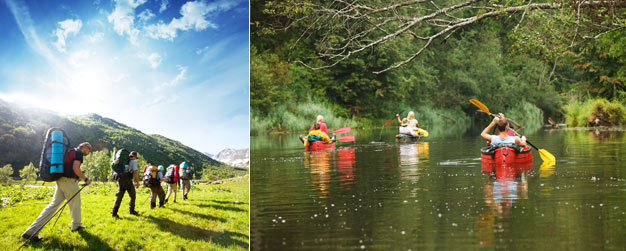
Wilderness restoration creates livelihoods as well as ecosystem servicesWilderness restoration creates livelihoods as well as ecosystem services

EC support for the role of wilderness in Green Infrastructure

There are many ways in which the EC can support wilderness restoration and protection through the EU Biodiversity Strategy and other mechanisms, eg:

  • ensuring existing and forthcoming legislation and guidance is understood and complied with
  • providing and encouraging appropriate funding support for restoration and protection projects
  • facilitating linkages between ecosystem services and funding benefits for conservation, landholders and communities – as outlined above
  • coordinating the DG programmes to minimize avoidable cross purposes – eg between connectivity (DG Environment) and infrastructure integration (DG Transport)
  • linking wilderness restoration opportunity and its socio-economic benefits to reallocation of funding from reforms to the Common Agricultural Policy
  • promoting dedicated financial provision by LIFE, Structure and other funding sources
  • encouragement of innovative capital and fiscal proposals currently being promoted by Wild Europe to fund wilderness area creation and protection

Wilderness and natural process restoration

Case Study 1····
Watershed restoration links with rural development

A seedcorn grant of 55,000 euro by European Nature Trust has been turned into a major 5 million euro riparian restoration programme along 50 km of river in Northern Scotland, attracting contributions from landowners and the Scottish Rural Development Programme.

Resulting connectivity corridors of native trees up to 400 meters wide are improving water quality, with benefits for biodiversity and fishing, as well as increased retention of precipitation and reduction in downstream flood potential.

This initiative demonstrates the benefits from reinstatement of natural processes and habitats – a key principle of wild area and wilderness restoration, echoing for example the much larger-scale Danube catchment initiatives.

Case Study 2····
Carbon funding from wetland reinstatement

Corporate funding from purchase of carbon offset units is enabling the transformation of extensive areas of uplands, degraded by decades of drainage and overgrazing, into wetlands with greatly enriched biodiversity.

In this win-win scenario the funding obtained is split between a payment for the landowner and the costs of restoration. A substantial surplus is also generated for wilderness and wild area related conservation elsewhere: including the breeding of European bison and wildcat.

Potential for wider application

Both these projects demonstrate clearly how restoration of natural processes and habitats can support the Green Infrastructure agenda, with potential for replication elsewhere.

Wild Europe strategy for wilderness: a driver for Green Infrastructure

Wild Europe’s strategy for wilderness dovetails in well with five key aspects highlighted by the European Commission during its preliminary consultation:

1. Making the concept operational

Wild Europe’s threefold emphasis on protection, restoration and communication strategy is grounded in a practical consensus for landholding, forestry, farming, business, urban social as well as conservation interests.

This also involves a core/ buffer/transition zoning approach to design and management of wilderness areas that enables reconciliation of different sector land use objectives while operating key wilderness principles  [see Definitions].

Development of guidance for non-intervention management, currently underway through the EC, will enable adoption of appropriate standards for wilderness in the field – enhancing its contribution to ecosystem services provision and biodiversity.

2. Making the concept integration compatible

With its emphasis on economics and business specialists working fully in tandem with conservationists, Wild Europe believes it is vital to achieve linkage between sectors, paralleled by linkage among the EC Directorate Generals (DGs) – Environment, Clima, Agriculture, Transport and Energy in particular.

We are promoting multi-sector alliances to support CAP reform, particularly relating to marginal agriculture and land abandonment. The aim is to create large new natural habitat – wilderness – areas that can link to the rural development agenda as well as supporting the objectives of the EU Biodiversity Strategy.

3. A coherent approach to spatial planning

This is a vital element, with wilderness and wild areas being planned as part of a broader context that enables improved productivity in commercial forestry and agricultural areas and links with urban recreational, hydrological, environmental and social requirements

The zonation approach [see Definitions] enables flexible and practical integration with these multiple spatial interests, as well as supporting the connectivity agenda.

4. Providing funding possibilities

As emphasised above, Wild Europe is focusing on identifying new as well as traditional funding sources, through the private sector (philanthropy, corporate, recreation and tourism) and public institutions (education, healthcare, probationary services) in addition to more traditional NGO, agency, governmental and EC provision. We are also assessing a range of capital input and fiscal funding opportunities.

Our agenda is as much about promoting appropriate policy as actual sourcing: eg facilitating linkages between biodiversity, ecosystem services and relevant funding flows. It is important to work closely with the TEEB 3 programme, promoting a cost-benefit valuation approach to project work.

New capital and fiscal initiatives can also prove important. Three of these for example involve: application of biodiversity offsets from aggregates and landfill levies at regional level; consolidation of future CAP liabilities into a Net Present Value format to match fund land purchases; buying land, establishing wilderness management covenants and reselling it.

5. The international agenda

This figures highly in our initiative, not least through broad-based partnership of international conservation NGOs. The CBD ecosystem linkage objectives are central in our strategy, with objectives from Nagoya in 2010 and Rio+12 later this year being a key emphasis.

There are also growing connections to other international fora – eg the 2009 World Wilderness Congress which produced the 11/09 Merida Declaration on ecosystems and climate change, the Convention on Migratory Species, the RAMSAR convention and UNESCO’s EuroMAB. There has, above all, been strong endorsement from the international conservation community.

If we in Europe are seen to protect and restore large wilderness and wild areas of undisturbed natural habitat and process, and do so moreover for economic and social as well as conservation motives, that sends powerful signals to less developed countries still determining the fate of their much larger and more pristine natural areas of habitat and wildlife.

2020 EU Biodiversity Strategy – a great step forward for wilderness

Discussion on implementation of the Strategy is currently under way. Wild Europe is one of five conservation NGOs participating in the EC Working Group on Forests and Natura 2000, providing input to this process. It will be replaced by the 2020 – 2030 version, for which Wild Europe is providing a range of inputs.

The EU Biodiversity Strategy published in 2011, which the 2020 version replaces, has been an important step forward for wilderness and wild areas across Europe.

EU Environment Commissioner Janez Potocnik introducing the Biodiversity StrategyEU Environment Commissioner Janez Potocnik introducing the 2011 Biodiversity Strategy

Wilderness was specifically included, for the first time – and furthermore directly in the context of forest protection (Target 3B Action 12). With old growth forest still being lost on a daily basis, this has been the most urgent requirement on our agenda.

Such inclusion would help with promotion of the Wilderness Register and of non intervention management approaches – both important elements in a protection strategy supported by Wild Europe.

There was an ambitious aim of restoring 15% of degraded ecosystems by 2020 (Target 2). This reflected the Nagoya declaration. It also related to the CBD’s 3rd Global Biodiversity Outlook report in 2010 which identified 200,000 sq kms of marginal and abandoned land in Europe where large scale ‘re-wilding’ (their term) with reinstatement of natural processes, habitats and species could significantly boost global conservation objectives.

There was, as expected, key focus on the economic benefits of biodiversity and in particular the role of ecosystem services in addressing climate change. This offered a further opportunity to prove and extend the remit for wilderness as an important element in EU European conservation strategy.

There were also many other elements in the EU Biodiversity Strategy through which the wilderness cause could be advanced, including issues such as connectivity, genetic diversity and resilience to invasive species.

This applied equally to wilderness and wild areas in EU and non EU states in Europe, with opportunities to support the latter through direct funding, neighbourhood agreements and trade policy.

Next Steps

With only 17% of the habitats and species and 11% of ecosystems theoretically protected under EC law actually identified as being in favourable condition, there is much that the wilderness cause can offer to European conservation.

Wild Europe finalized development of its Wilderness Strategy and, within this, its proposals for Restoration Strategy and CAP reform – linked closely to support for the main objectives of the EU Strategy and its twin pillars of Natura 2000 and green infrastructure.

For a full version of the new Biodiversity Strategy, see: An EU Biodiversity Strategy to 2020

Read more: Benefits of wilderness in supporting EU Strategy targets

The impact of Brexit

Attribution: Tom Janssen

Wild Europe was on the verge of becoming a foundation with fully-fledged legal status, back in June 2016. Then came the Brexit referendum result.

We have since been evaluating alternative ways forward, and are grateful for the highly positive feedback received during a subsequent consultation exercise.

The Endowment Fund will still be developed to provide sustainable finance for basic core costs, and initial grants have already been arranged for key initiatives.

Equally our objectives and activities will not be altered. The threats and opportunities facing natural ecosystems across the continent remain the same. And we will continue to address our agenda with colleagues in non-EU as well as EU countries.

Our overall message, that Wild Europe now has the capacity to operate as a long-term entity to champion wilderness, remains unchanged.

The one element we will need to address is geographic orientation. We will retain an office in London, but over the next two years we will progressively shift our legal and operational centre of gravity into a country with permanent EU membership.

To this end we are currently talking with a couple of partners, and further proposals will be circulated for agreement in due course.

Our Brexit objectives

Wild Europe’s three objectives in response to Brexit are currently:

  1. to encourage ongoing EU and European orientation by our associates in the United Kingdom, focused on a major role for cooperation on environmental issues in any negotiated package once Article 50 is triggered
  2. to seek full retention of the UK’s heritage of EU environmental legislation, resisting any internal “Fitness Check” which could have negative consequences beyond the UK
  3. to take advantage of new opportunities within the UK that may have wider relevance, for example CAP reform leading to greater emphasis on payment for provision of environmental benefits

Above all, we will continue with development of a core executive team to expand the range and impact of Wild Europe’s activities.


Old Growth Forest Protection Strategy launched

The strategy developed through the Wild Europe conference in September for Protection of Old Growth Forest in Europe has now been launched.

A sixteen page document summarising the proposals is being circulated to the 149 organisations and individual experts from 28 countries who participated, together with a further 1100 contacts across Europe who were invited to the conference or otherwise involved in consultation and formulation of proposals.

Beech forest habitat

“The objectives behind this Strategy are necessarily ambitious” declared Toby Aykroyd, coordinator for Wild Europe “But if the many organisations expressing an enthusiastic welcome for it are now able to translate this into practical action, these objectives can be achieved”.

A race against time

Ancient forest habitat is an exceptionally rich and fragile element of our natural heritage. Yet it is still under imminent threat of destruction in many areas. With rising timber prices, inappropriately located infrastructure, and even the impact of some misconceived renewable energy policies, there is a race against time to protect it.

Logging in Fagaras mountain

Your comments on the Strategy are welcomed:

  1. How might it be added to?
  2. How would you like to get involved?
  3. Do you know others who might also like to be involved?
  4. Can you provide information on areas of forest under threat?

Emails in the first instance please to info@wildeurope.org

Message from HRH the Prince of Wales heads wilderness and natural heritage programme

His Royal Highness The Prince of Wales opened the session by video messageHis Royal Highness The Prince of Wales opened the session by video message

A programme of presentations at Forum 2000 organised by Wild Europe in Prague was opened by a video message, kindly supplied for us by His Royal Highness the Prince of Wales.

Welcoming participants, His Royal Highness focussed on the value of wilderness alongside areas of traditional agricultural livelihoods, as being essential for the wellbeing and health of modern society.

Stressing the practical as well as the aesthetic and spiritual importance of this rural heritage and the need to provide effective protection for it, His Royal Highness declared “one of the greatest assets of Central and Eastern Europe is its massive wilderness areas“.

The wilderness and natural heritage programme at Forum 2000, a high-level international gathering of politicians, media and activists, was organized by Wild Europe.

Vaclav Havel, the late President of the Czech Republic, author of the Velvet Revolution in 1989 and founder of Forum 2000, played a central role in the Prague wilderness conference in 2009 which formally launched Wild Europe.

The programme was thus designed as a testament to the great statesman, built around themes from his philosophy on the environment.

A mosaic approach to land use

Christoph Promberger Director of Fundatia Carpathia, Thierry de l’Escaille Secretary General of ELO, Professor Bedrich Moldan former Environment Minister (Moderator), Jan Kriz, Deputy Minister (OBO Richard Brabec, Environment Minister), Nat Page Director of ADEPTChristoph Promberger Director of Fundatia Carpathia, Thierry de l’Escaille Secretary General of ELO, Professor Bedrich Moldan former Environment Minister (Moderator), Jan Kriz, Deputy Minister (OBO Richard Brabec, Environment Minister), Nat Page Director of ADEPT

The first day’s session on 13th October, titled Caring for our heritage to reconnect society with nature, was moderated by Professor Bedrich Moldan, former Environment Minister of the Czech Republic. An underlying message was opportunity for mutually beneficial coexistence of a range of land uses: a continuum from working agricultural landscapes to wild and wilderness habitats.

This was reflected in the range of contributions which included Thierry de l’Escaille, Secretary General of the European Landowners Organization, who outlined the dual role of ELO and its membership in caring for production and nature in the countryside. He spoke alongside Christoph Promberger, Founder-Director of the huge Wilderness Reserve initiative currently being created in the Romanian Carpathian Mountains. Nat Page, Founder-Director of ADEPT, the highly successful rural heritage programme in Romania, then explained how working landscapes along with wilderness areas could bring considerable benefit to communities and landholders.

The value of natural ecosystems

The session was closed by an explanation from Environment Minister Richard Brabec, through his Deputy Minister Jan Kriz, of the value of healthy natural ecosystems, with economic considerations being a means to an ultimate objective that was about social wellbeing. He also spoke of Václav Havel’s commitment to conservation, so nature should not become “the victim of man’s exploitations.

Remarking that the Velvet Revolution had its roots in ecology, the Minister noted that the situation in Sumava National Park had proved an ongoing challenge. If people better understand the full value of an area with its natural ecosystems they will better protect it.

Reaching across frontiers

The second session on 14th October, titled Reaching across frontiers, the transformative power of wild nature, was opened by Ladislav Miko, former Environment Minister in the Czech Republic and Director of Natural Environment at the European Commission in Brussels.

Jaromir Blaha, Renata Krzysciak-Kosinska, Pavel Hubeny, Ladislav Miko and Toby Aykroyd ... under the watchful eye of Vaclav HavelJaromir Blaha, Renata Krzysciak-Kosinska, Pavel Hubeny, Ladislav Miko and Toby Aykroyd … under the watchful eye of Vaclav Havel


He was followed by Toby Aykroyd Director of Wild Europe who gave a resume of progress for wilderness and wild areas since the 2009 EC Presidency Conference on Wilderness in Prague, which opened to Vaclav Havel’s ringing declaration: “we have lost sight of eternity and are destroying nature

Two presentations were devoted to the priceless natural heritage of wilderness in Sumava and the campaign to protect it, as described by Jaromir Blaha of Hnuti DUHA, Czech Friends of the Earth, followed by the Park’s recently appointed Director, Pavel Hubeny, who emphasized how in reality only small parts are truly protected.

Pavel Hubeny, Director of Sumava National Park

The session was rounded off by Renata Krzysciak-Kosinska, Head of Information and Education at Bialowieza National Park in Poland. She recounted how a huge extension of the UNESCO World Heritage Site, from 5,500 to 65,000 hectares, had been agreed in Summer 2014. This reflected important recognition for the ecological value of this great forest, some 1100 kilometers North East of Sumava.

The programme was closed by Ladislav Miko, who stressed the timeliness of the occasion: demonstrating how different interests of our rural environment could be reconciled, whilst highlighting the clear value of our vulnerable wilderness heritage and its crucial importance to contemporary society.

Film show – wilderness and society

A screening later that evening provided a rich variety of wilderness related films.

Toby Aykroyd of Wild Europe and Wilderness Foundation UK introduced the first film, Brothers in Arms, an account of how wilderness had played a key role in reconciliation of former terrorist adversaries and their army and police counterparts in Northern Ireland.

Dr Jan Pinos of Hnuti DUHA, Friends of the Earth Czech Republic, then outlined the story of the campaign to protect Sumava National Park – propelled by growing civic involvement with conservation. This was followed by the film Silva Gabreta, presented by Ladislav Miko, providing unique insight into the ecology of Sumava – and precisely why protecting large areas as non-intervention wilderness is so important.

Erik Balaz, of Aevis Foundation, presented a new film Wolf Mountains – introducing a hitherto largely unknown region of Central Europe. Straddling the frontiers between South Eastern Poland. Slovakia and Western Ukraine, it hosts a rich biodiversity including unusually abundant populations of wolf, bison, bear and lynx within one of Europe’s most unspoiled wilderness landscapes in Europe. A top priority for protection.

The screening concluded with a video message from His Royal Highness Charles, The Prince of Wales, stressing the importance to society of protecting its rural heritage: “Wilderness…. provides a link to our past…as well as a link to our livelihood.

Wood energy schemes “a disaster” for climate change

A study published in London on 23rd February 2017 by the well respected Royal Institute of International Affairs warns that most schemes to generate “low carbon electricity” from wood burning are actually doing the opposite, with carbon emissions from wood pellets higher than coal and considerably higher than gas.

Calculations of net carbon savings have not been counting emissions from the actual wood burning, merely assuming that these are countered by the sequestration impact of new plantings – which effectively leaves a large gap.

Hot air for climate policy - logging for renewable energy in Poloniny National Park Photo Peter Sabo, WOLF Forest Protection MovementHot air for climate policy – logging for renewable energy in Poloniny National Park Photo Peter Sabo, WOLF Forest Protection Movement

The Study also casts further doubt on the feasibility of BECCS (Bioenergy Carbon Capture and Storage), aimed at removing carbon from the environment by large-scale tree felling together with use of energy crops and storage underground of resulting carbon emissions. “However, all of the studies that the IPCC surveyed assumed that the biomass was zero-carbon at the point of combustion, which … is not a valid assumption. In addition, the slow rate of deployment of carbon capture and storage technology, and the extremely large areas of land that would be required to supply the woody biomass feedstock needed in the BECCS scenarios render its future development at scale highly unlikely.

Urgent review of biomass policy

Written by Duncan Brack, a former Special Advisor to the UK Government, the Study calls for immediate review of subsidies for biomass, which now supplies 65% of renewable power in the EU on the back of generous subsidies.

With the EC currently proposing a new Directive on Renewable Energy (draft published 30th November), there are growing calls for reallocation of subsidy exclusively towards wood waste products where there is no extra harvesting and proven carbon savings.

Impacts on biodiversity and illegal logging

This urgency of this call is underlined by an investigation published in November 2016 by BirdLife International with Transport & Environment showing that bioenergy plants are burning whole trees from protected areas rather than using forest waste.

This includes biomass from logging in Poloniny National Park (Slovakia), and riverine forests around Emilia-Romagna (Italy) where tree removal was apparently disguised as flood mitigation.

In Slovakia alone, according to the investigation, there has been an increase in use of wood for bioenergy of over 70% in the last 10 years, impelled by EU Renewable Energy targets. Under current legislation, European bioenergy plants do not have to produce evidence that their wood products have been sustainably sourced.

Beaver reintroduction confirmed in Scotland

The beaver (Castor fiber) has been formally recognized by Scottish Government as a native species.

This means that the trial project in Knapdale, on the West coast of Scotland, has become a permanent settlement, which can be expanded. The much larger, but ‘informal’ population of some 150 escapees that have been breeding wild on the River Tay in the East can remain.

24 hours a day of free ecosystem engineering Attribution: Harald Olsen24 hours a day of free ecosystem engineering Attribution: Harald Olsen

This also paves the way for further reintroductions, from which the beaver will eventually spread across Scotland – albeit with careful management under the watchful eye of landowners and farmers.

The announcement should also give impetus to reintroduction in Wales, where it is 11 years since Wild Europe launched the Welsh Beaver Forum at a conference in Newtown (July 2005), and commissioned WildCRU Consultancy of Oxford University to produce the Beavers Mean Business study of their economic impact.

This lead to formation of the Welsh Beaver Assessment Initiative to assess and promote feasibility of reintroduction (see WBAI Report). Approval to proceed has since been given by two ministers, although this has yet to be translated into action.

England, where there have been impromptu releases of a few individuals in the West Country, should not be far behind. Even after Brexit, beavers have little respect for national frontiers…

This icon of natural ecosystem restoration, or ‘rewilding’, has now been reintroduced to some 28 countries across Europe. In addition to enriching wetland biodiversity, its role in mitigation of flooding and stablisation of water tables is becoming well proven, and it offers significant scope for nature tourism.

Full steam ahead for Rewilding Britain

The Great Fen, East Anglia - not all re-wilding occurs in marginal uplandsThe Great Fen, East Anglia – not all re-wilding occurs in marginal uplands

This initiative was established in 2014 from a broad-based coalition of NGOs, with Wild Europe as a trustee.

It aims to catalyse the return of large areas of fully functioning ecosystems together with their wildlife to one of Europe’s most crowded and highly developed countries – highlighting the benefits of such areas to the general public, media and decision takers in government.

By 2030, within 15 years, Rewilding Britain has set itself the target of establishing 300,000 hectares of core land, connected wherever possible, together with three marine reserves.

The three partner countries

Remnant of the Great Forest of Caledon – Glen Affric. Copyright: Alan Watson/Forest Light.jpgRemnant of the Great Forest of Caledon – Glen Affric. Copyright: Alan Watson/Forest Light.jpg

Scotland of course has the greatest geographic potential, particularly in the Highlands and Islands – with the Cairngorms and Flow Country regions beckoning as particularly extensive opportunities. As does the Borders Country with its visionary restoration projects in and around the Carrifran Valley. Wild Europe (as Wild Scotland) set up a joint study on the social and economic benefits of wild areas in 2005, subsequently developed through Scottish Natural Heritage which is now planning an upgraded edition.

Poised for reintroduction. Photo credit: "Beaver pho34" by Per Harald Olsen. Licensed under CC BY-SA 3.0 via Wikimedia CommonsPoised for reintroduction. Photo credit: “Beaver pho34” by Per Harald Olsen. Licensed under CC BY-SA 3.0 via Wikimedia Commons

In Wales there is also extensive potential for rewilding: in the southern Brecon Beacons, the mid-country Elan and Plynlimon Valleys, and northwards into Snowdonia.

Wild Europe is partnering a project it initiated (as Wild Wales) back in 2005 to reintroduce beaver, a keystone species for rewilding. This has already occurred in 27 countries across Europe and after much delay it is hoped there will finally be a go-ahead once the Scottish Executive takes its own decision whether to give permanence to a trial reintroduction at Knapdale. There is even substantial scope for rewilding in England, with initiatives such as Wild Ennerdale in the Lake District and the Great Fen in East Anglia already well established.

A strategy for Northern Ireland is pending once the main group has become established.

Throwing down the gauntlet … to mainland Europe

Although only recently established, Rewilding Britain’s advent has been widely welcomed by the conservation community.

It represents a considerable leap forward for the rewilding agenda, building on awareness raised by such organizations as the Wildland Network, and the consultation and planning exercise undertaken by the Wild Britain initiative back in 2004 – 06.

Substantial funding has already been raised for recruitment of a full time director and an executive team.

Perhaps most significant of all, there is potential to establish three areas – one in Scotland, Wales and England – conforming in scale to the Wild Europe definition of wilderness.

That would be a true pointer for all other countries!

Wild Europe joins new rewilding group in France

Rewilding through natural regeneration is widespread in the Pyrenees and many other areas of FranceRewilding through natural regeneration is widespread in the Pyrenees and many other areas of France

In 2012 a specialist Wilderness Group was established, within the IUCN National Committee based in Paris, to assess potential for a wilderness strategy.

This brought together a widely acknowledged range of experts from NGOs with participation by the L’Office Nacional des Forêts (ONF), the state forestry agency.

Wild Europe was invited to participate in the IUCN France Group, and since regularly provided input to meetings in Paris. We have also promoted the benefits of wilderness more generally in a European context, though a conference in Chambery (2013) and via media such as the Naturalité publication.

World class potential

With its extensive near-natural areas, relatively low rural population density, world class conservation management and well developed eco-tourism market, France has great potential for developing its strategy.

This can involved a range of habitats including forest, but also wetland, litoral, grassland and Alpine.

A strategy outline has been proposed and prospective opportunities are currently being identified through preliminary mapping.

The Economic Benefits Working Group

Introduction

The economic benefits group is tasked with identifying, valuing and promoting the economic benefits of wilderness and wild areas, with focus on non extractive, no-impact benefits derived from ecotourism, ecosystem services and usage for social betterment.

The group will initially include business people, economists, ecosystem specialists, landowners, farmers, social enterprise entrepreneurs – all of whom share a profound regard for wilderness as well as contributing their professional expertise.

While the true intrinsic value of the wild is priceless, there is no doubt that realization of its economic value can attract support for its protection and expansion. However, as laid down firmly in the Group’s operating principles below, our aim is to strengthen, not replace, traditional approaches to wilderness and wild areas.

Protecting wilderness can bring economic benefits

Objectives

1. To identify and promote, wherever desirable and feasible, economic benefits arising from non-extractive, minimal impact activities relating to wilderness and wild areas, viz:

  • nature tourism
  • related activities: recreation, corporate events, themed retreats
  • ecosystem services: carbon sequestration, flood mitigation, pollution alleviation, others
  • social services: education, youth development, youth at risk, healthcare, peace & reconciliation
  • ancillary activities: visitor centres, guiding, accommodation & sustenance, retail, craft, transport
  • related goods and services in adjacent areas benefiting from association (wilderness image, logo, product value added, marketing, productivity and business support)

These benefits would be additional to any relating to biodiversity value, which could, where appropriate, themselves be enhanced with restoration and species reintroduction, with associated grant and enterprise opportunity.

2. To apply these economic benefits to protection or restoration aims in specific areas, and to national and organizational strategies.

Where relevant this can involve using ANEEP – Assessment of Non Extractive Economic Potential as a multi-level instrument of analysis of benefits associated with wilderness and wild areas. According to the level chosen, the ANEEP could include:

  • overview of non-extractive economic benefit potential
  • linkage to restoration and reintroduction opportunity
  • cost:benefit exercises for alternative approaches
  • identification of specific opportunities – matching with operatives if relevant
  • signposting to sources of funding, advice, marketing networks
  • assistance with planning and upgrading of local capacity

3. To input credible economic benefit content for Wild Europe’s general strategy and individual policy objectives – eg:

  • support for establishment of national wilderness strategies
  • networking for collective address of threats
  • input to individual programmes – eg Old Growth Forest strategy, Common Agricultural Policy (CAP) Reform
  • economic rationale and business enterprise development for social benefits
  • collation and dissemination of best practice
  • promoting models for Forestry Agency adoption (replicating Coillte/Nephin Ireland, FCS Scotland, Staatsbosbeheer Netherlands)
  • demonstrating wilderness benefits to European Commission and Member States – viz support for the N2000 programme, Green Infrastructure and PES, rural development programme, other (non Environment) DG objectives
  • ensuring the equivalent for non EU countries – via input to best practice sharing, Neighbourhood Agreements, Accession Treaties, trade & aid agreements

Six Principles for operation

  1. The economic benefit approach is intended to reinforce, not replace or overshadow, traditional approaches to promotion of wilderness and wild areas – namely their intrinsic, spiritual and ecological values.
  2. Any project entered into via this economic benefits approach would have the above principle enshrined in its Mission Statement to govern all strategy and activity.
  3. Any proposals for economic benefit implementation would be preceded by an Impact Assessment to ascertain that their ultimate consequence would be not inadvertently catalyse developments damaging to the underlying wilderness and wild area objective.
  4. Management and ownership controls would be adopted to assure these principles are fully enacted.
  5. Any related developments would be located with future expansion of wilderness and wild areas in mind.
  6. In identifying beneficiaries from benefit development support, priority will be given to local communities and landholders as well as key supporting decision takers.

Mode of Operation

Principally by email and phone, meeting in parallel with the Wild Europe Executive Committee.

Some 15 – 20 members including specialisms in ecology, conservation management, tourism enterprise, business finance and management, agronomics, macro economics, ecosystem services, fund raising.

Two co-chairs: Toby Aykroyd and Neil Birnie

For further information: tobyaykroyd@wildeurope.org

Bark Beetle Breakthrough

Ips typographus – a solution in the offing?Ips typographus – a solution in the offing?

The goal: keeping this natural process away from commercial forestryThe goal: keeping this natural process away from commercial forestry

New potential for acceptance of non-intervention management by foresters

A new consensus is emerging between conservationists and forest managers on management of bark beetle in non-intervention circumstances.

The breakthrough centres on an Austrian initiative to provide guidance on dealing with bark beetle outbreaks in Austrian national parks and wilderness areas, without compromising the non-intervention philosophy in the core zone of these areas and at the same time providing sufficient protection to surrounding landowners and their managed forests.

This is the result of an intensive discussion process between Austrian conservationists, landowners, forest management authorities, park administrations and the Austrian Ministry of Forests, Agriculture, Environment and Water Management.

The initiative is based on development of a zonation model, which foresees a bark beetle control zone of varying width around the non-intervention zones of the protected areas. It builds on recent research and practical experience in the Kalkalpen National Park and the Dürrenstein Wilderness Area, both of which adhere to a strict non-intervention management regime in their core zones: 15600 ha in Kalkalpen, 3500 ha in Dürrenstein.

The model is inspired by a comparable zonation in the oldest parts of the Bavarian Forest National Park, but it is more sophisticated than the Bavarian model. It now enjoys the broad support of Austrian conservationists and forest management authorities alike.

The initiative is explained in a Position Paper which marks a milestone in Austrian wilderness policy. It will hopefully provide a basis for setting up further large scale non-intervention areas in the spruce-dominated mountain forests of Austria and elsewhere in Europe.

Holland goes Wild – a message for developed landscapes

Konik horses running free in Oostvaardersplassen – Photo Hans KampfKonik horses running free in Oostvaardersplassen – Photo Hans Kampf

In the heart of Europe’s most heavily developed country, scarcely 30 kms from the centre of Amsterdam, lies a miracle of wildness.

Literally meaning “wetlands to the East” the 5,000 hectare Oostvaardersplassen was reclaimed at great expense from the sea back in 1968. Because of its central location the site was originally designated for industry. But its importance for wildlife, and particularly waterfowl migration, rapidly became evident. It was saved from development and has now been declared a Special Protected Area (SPA) for birds and a Ramsar Site1.

A Vision for the Wild

The potential to create a radical new experiment in wild area management was realised by a small group of committed ecologists led by Frans Vera from the Dutch Forestry Service and Fred Baerselman of the Agricultural Ministry together with Hans Kampf. Comprising 3500 hectares of wetland and 2000 of higher dry polder in a mosaic of reed beds, grassland and small woodlands, the area is now roamed by large numbers of free-ranging herbivores. It is overseen by Staatsbosbeheer, the Dutch Forest Agency – whose role has been remodeled from timber producer to guardian of natural reserves.

There is a magnificent herd of some 3000 red deer, complemented by large groupings of the stocky Konik horse – a primitive descendent of Europe’s original equine species – alongside long horned Heck cattle, relative of the extinct Auroch or forest ox, and named after the controversial German brothers who conducted a series of eugenic breeding trials in the 1930s.

The wild savannah ... of HollandThe wild savannah … of Holland

The landscape itself bears an eerie resemblance to truly wild savannah in Africa with its drifting herds and profusion of bird life – spoonbill, black stork, egret, bittern, bluethroat, marsh harrier and even sea eagle mingle with vast flocks of duck and goose.

This is precisely the effect its promoters are aiming at: seeing how natural processes unmodified by human intervention will impact on habitat types. In particular, Frans Vera has sought to test his theory that pre-historic, that is pre-hominid, Europe was originally covered not with close canopy forest but a park-like landscape of woodland pasture – similar to its geographic counterpart South of the Sahara where vast herds of ruminants have kept the interaction of forest and open plains in constant flux.

A challenge to peri-urban and developed landscapes everywhere

Beyond the theories underlying its changing patterns, Oostvaardersplassen is a stunning example of how government can be persuaded to lay aside short-term economic interests in a bold initiative that has put Holland, a country of 16 million crammed into only 4.2 million hectares, at the forefront of large-scale wild area creation. In so doing it has created a national treasure of great international significance.

Expansion corridorExpansion corridor

In Britain, France or other Western nations, sheer cost, competition from other land uses, animal welfare and legal considerations could create obstacles to similar initiatives.

It is also questionable whether unregulated increase in herbivore numbers in the absence of key predators or intervention management can produce a sustainable ecosystem in Oostvaardersplassen. And there are many who prefer native browsing and grazing species such as bison and deer to Heck or Konik livestock, creating a more varied and less open landscape.

However, there is no denying that the area has shown what rewilding vision can achieve in proximity to great cities – given the will and ability to match the needs of contemporary urban society.

This was most graphically demonstrated in 2005 when a harsh winter led to massive die off of herbivores and concern about animal welfare in the Dutch Parliament.

The solution? Typically Dutch, typically creative and proactive: a proposed expansion to the South East of Oostvaardersplassen’s area, doubling the wild area. This involved a partnership with the Province of Flevoland with its growing population that planned to complement the demands of urban life on its citizens with a mix of wild area experience and recreational activities. This initiative has faced challenges, and the 200 million euro programme to purchase high-grade agricultural land is currently on hold. But again there is no denying the boldness and vision of the approach.

Kampinos: another island of wildness on the doorstop of a major metropolisKampinos: another island of wildness on the doorstop of a major metropolis

A similar approach has been adopted 500 miles further East, with the creation the Kampinos National Park in Poland. Just 8 kms from the centre of Warsaw in Poland this 40,000 hectare area harbours moose, beaver, lynx and crane.

Is London or Paris ready for a modified version of Oostvaardersplassen or Kampinos on their doorsteps?

Network of Ecological Corridors

Oostvaardersplassen is merely the crown jewel in a yet bigger concept – that of a network of ecological corridors linking natural habitat areas throughout Holland and into neighbouring Germany and Belgium.

Akin to the human blood circulation, the system replicates a series of “green” arteries, veins and capillaries.

The network of ecological corridors in the Netherlands (from Hootsmans & Kampf)The network of ecological corridors in the Netherlands (from Hootsmans & Kampf)

These range in scale from large corridors of restored grassland and trees bulldozed through relocated industrial and housing estates and the building of “eco-bridges” over major transport routes – to the planting of riparian vegetation alongside small drainage ditches.

Originally aiming for completion by 2018, the vision has been based on a partnership of local community, business and conservation interests. It is of epic proportions.

Wherever feasible, a range of compatible land uses will be practiced alongside conservation, including flood management, carbon absorption, healthcare and recreation. Such pragmatism recognises that rewilding – restoration of ecosystems run by natural process rather than human intervention – can address a spectrum of societal needs if large areas are to be successfully secured for nature.

Eco corridor spanning a motorway in the NetherlandsEco corridor spanning a motorway in the Netherlands

Currently also stalled by recession, budget cuts and changes in government, the Network may yet eventually accomplish its target of encompassing 730,000 hectares – a startling 17% of Holland’s total land area – through a combination of direct purchase and subsidised arrangements with private owners. Many of its key components are already in place2.

Wider lessons for re-wilding

Whatever challenges re-wilding and green connectivity in the Netherlands currently face, the opportunities highlighted by this pioneering vision are clear.

A series of large natural wild and even wilderness areas linked by a network of habitat corridors is now an entirely practical opportunity for many other countries, including the UK, France and Italy.

Despite rising commodity prices, particularly for timber and lamb, substantial areas of marginal farmland of far lesser value than Oostvaardersplassen will continue to be uneconomic for agricultural production as subsidy cuts take their toll from CAP reform over the next 15 years. Equally there is growing realization that the economic, social and environmental benefits from large natural habitat areas can now offer an increasingly significant alternative livelihood for landholders and local communities – whether rural or urban3.

Meanwhile, climate change creates its own imperative for species adaptation and migration which traditional small-scale nature reserves may become increasingly unable to deliver. Rising sea levels are managed by economically cost-effective coastal retreat, with creation of new salt marshes in large litoral restoration initiatives.

Britain for example is nearly six times the size of Holland, with a substantially greater proportion of low productivity land. France has even greater spatial opportunity.

Can nature NGOs in partnership with government and a broad array of community social and business interests rise to the occasion – and usher in an era of landscape-scale re-wilding?

References

1. Special Protected Area explanationRamsar site explanation
2. Hootsmans & Kampf: “Ecological Networks in the Netherlands”. Ministry of Agriculture, Nature and Food Quality, Holland
3. Aykroyd TNB “Wild Britain Initiative”

Updated in 2015