Affirmation for the vital role of strict protection in EU Biodiversity Strategy

A recent Technical Note on strict protection from the World Council on Protected Areas (WCPA) Working Group for Europe, coordinated by Zoltan Kun of Wild Europe, has re-affirmed the crucial role played by non-intervention.
This supports the European Union’s definition, which states the purpose of strict protection as being to “restore the integrity of biodiversity-rich natural areas with their underlying ecological structure and supporting natural environmental processes” in which “natural processes are therefore left essentially undisturbed from human pressures”.
The wider context for strict protection
Non-intervention management applies to all primary habitats referred to in the EU Strategy “including all remaining primary and old-growth forests as well as other carbon rich ecosystems, such as peatlands, grasslands, wetlands and seagrass meadows.” This is in contrast to secondary habitats – eg heathlands, woodland pasture, managed wetlands and post-disturbance areas – that will otherwise revert to their primary condition through natural succession in the absence of human intervention.
The EU Biodiversity Strategy is aligned with the 30 x 30 Kunming-Montreal Global Biodiversity Framework. This calls for at least 30% of EU terrestrial and marine areas to be protected by 2030 – a third of which should be strictly protected.
Hence there is an overall target for 10% of the EU’s terrestrial and marine areas to be strictly protected, including a 10-15% target for old growth & primary forest as a proportion of total tree over.
There are thus historic opportunities for expansion of strictly protected areas, utilising the EU’s Nature Restoration Regulation, the EU’s Biodiversity and Forest Strategies, the LULUCF (Land Use, Land Use Change & Forestry) agenda addressing climate change, and national objectives – eg Germany’s national goal for 2% wilderness coverage.
The application of strict protection
Strict protection does not just have to involve areas where natural ecological processes are already functioning well, it can also apply to restoration of former farmland or forestry.
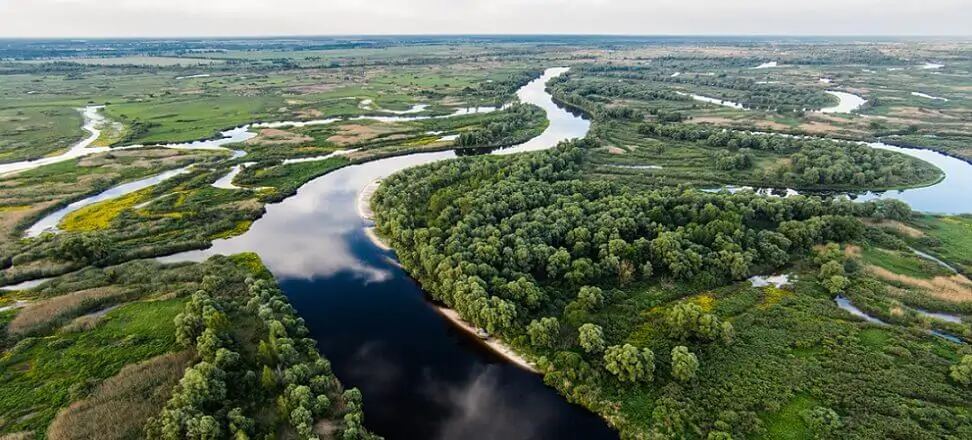
Equally strictly protected areas do not have to be large. Their main function is to protect natural processes and ensure minimal human impact, aside from any initial restoration support (eg removal of artificial drainage, planting where original seed source is no longer present). However the larger the area the greater the opportunity for ecological integrity and reduced proportionate “edge effect” from external pressures. So definitions involving strict protection do usually cite bigger areas, often of natural or near natural ecosystem (also known as ‘wilderness’).
The main IUCN strictly protected area definition is a Category 1B wilderness area:
“Usually large unmodified or slightly modified areas, retaining their natural character and influence, without permanent or significant human habitation, protected and managed to preserve their natural condition”
This Category 1B is a close correlation with Wild Europe’s definition of wilderness (large natural ecosystem areas), based on an adaptation for Europe:
“A wilderness is an area governed by natural processes. It is composed of native habitats and species, and large enough for the effective ecological functioning of natural processes. It is unmodified or only slightly modified and without intrusive or extractive human activity, settlements, infrastructure or visual disturbance.”
This definition formed the basis for the EU Guidance in the Natura 2000 Network and the EU Wilderness Register, as well as a wide range of other areas across Europe including the core of Hohe Tauern, the oldest National Park in Austria, designated according to Wild Europe criteria for non-intervention.
The definition is also supported by the IUCN’s 2021 Resolution 127 on “Strengthening the protection of primary and old-growth forests in Europe and facilitating their restoration passed by a massive 674 votes of which 93 were Category A including governments, calling for cessation of timber extraction. This wasbased on the Old Growth Forest Protection Strategy correlated by Toby Aykroyd of Wild Europe– produced in 2018 but still being implemented.
The other instrument for IUCN ‘strict’ protection is Category II:
“Large natural or near-natural areas protecting large-scale ecological processes with characteristic species and ecosystems, which also have environmentally and culturally compatible spiritual, scientific, educational, recreational and visitor opportunities”.
This is a more widely used definition. However a problem here can be over-development of tourism infrastructure and, in the case of National Parks, lack of protection from eg extensive logging where this is not a specific stipulation in the NP Management Plan or national law.
Key aspects of the WCPA Technical Note
With address of the climate change and biodiversity crises particularly in mind, the Report’s objectives support a standardised approach:
- Informing key decision players
- Supporting clear definition of a strict protected area
- Guiding decisions on designation
Aspects of strict protection include:
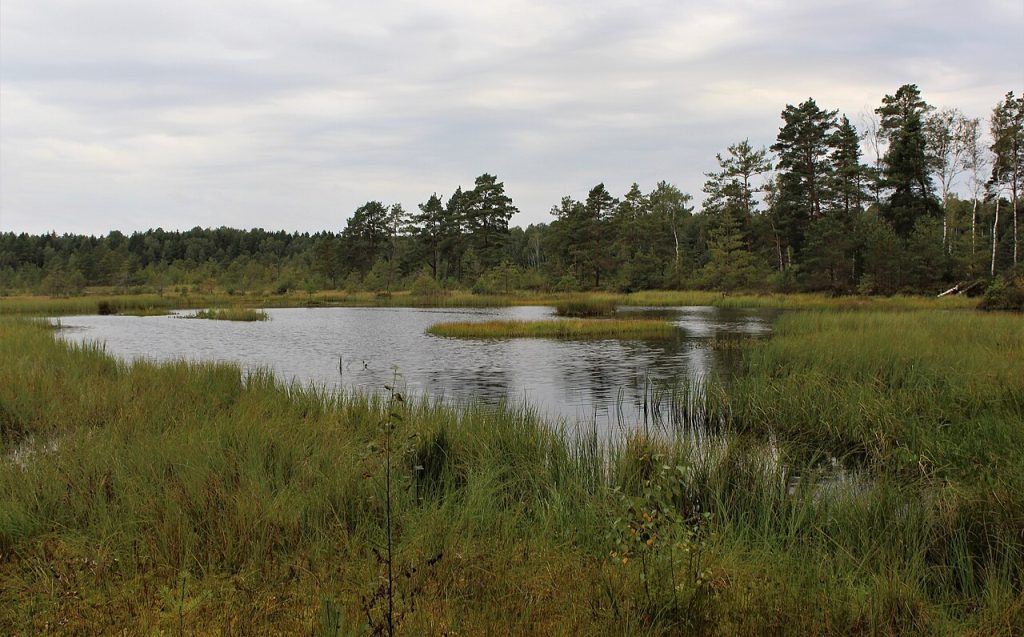
- Allowing access for personal wellbeing, except for limited spatial or seasonal restrictions due to nesting or other reason
- Undertaking active protection, research, visitor guidance and other activities. Non-intervention does not mean inaction.
- Intervention only allowed where ecological integrity is threatened – eg by excess deer numbers, proliferation of alien species or contagious disease.
- Prohibition of all extractive activity including timber, firewood, nuts and berries, fishing or hunting
- Use of zonation to reconcile competing land uses, ensuring a large core area of complete non-intervention
- Maximising the timescale for protection, ideally in perpetuity through direct ownership, easement or state law
- Linking different habitat types – eg forest with wetland – in a mosaic that creates ‘ecotones’ which are often areas of richest biodiversity, and supports the overall agenda for connectivity
Interventionist conservation for specific species will still be needed, and this should also secure strict protection – with secondary habitats and ‘spot’ protection in specific locations. But very often this can involve mixed land use (including grazing, mechanical cutting and coppicing) and it is also catered for in the remaining 20% of area to be protected, often involving cultural landscapes.
Benefits of strict protection with long-term application
- A highly cost-effective conservation approach, using natural processes rather than human intervention
- A crucial refuge for species with requirements for non-disturbance, large territories, old growth trees; these range from mycorrhizal fungi networks to bats, woodpeckers, large carnivores)
- Provides a crucible for ongoing evolution, hindered elsewhere, and a benchmark for ecological integrity
- Can deliver ecosystem service benefits at scale for address climate change (carbon storage, catchment scale flood alleviation, water table stability, improved water and air quality) and biodiversity loss
- Particularly important for mitigation and resilience of forests: minimising temperature and airflow, maximising humidity thus stabilising carbon storage, and providing resistance to drought and (generally) wildfire even in the Mediterranean region
- Deep forest floor litter and non-compacted ground will further maximise flood alleviation
- Greater naturalness provides high quality environment for nature tourism, low impact recreation and ancillary activities
- This also supports the social benefit sector addressing contemporary societal issues: psychological healthcare, youth at risk, conflict resolution
Economic and financial contribution
All the above attributes related to strict protection and non-intervention can contribute significant income and employment for local communities, as well as attracting grants and capital for non-extractive ecosystem services – particularly from private sector sources (the Payment for Ecosystem Services, PES, agenda). Furthermore, the impact of such services is easier to monitor, and inaccurate measurement whether intentional or deliberate is easier to avoid, with non-intervention than mixed use management.
For forests and other habitats non-intervention can thus also alleviate the growing costs of climate change to the wider economy, not least by helping reverse the decline of carbon sinks with their mitigation potential and strengthen the resilience of ecosystems, supporting 2030 Green Deal targets.
This is a crucial consideration at a time when the funding – and policy – gap for achieving conservation objectives is widening due to slow economic growth, resource reallocation for defence expenditure and the impact of the EU “economic competitiveness” agenda.